4.9 Out of 5 based on 875 reviews

Have you noticed that one side of your back feels more painful when sitting or lying down? Perhaps you feel a prominence against your chair on the painful side, or struggle to find a comfortable position. While this may be related to general postural imbalances, it can also be a symptom associated with structural scoliosis.
Scoliosis is a three-dimensional condition that causes the spine to shift laterally and rotate around the longitudinal axis. This often affects balance and the function of the surrounding muscles. The muscles and tissues surrounding the curvature may become overstretched and overworked, while those on the concave side can become compressed and weaker due to lack of use. This muscular imbalance and increased workload can contribute to discomfort and pain, particularly around the prominence of the curve. Contrastingly, with scoliosis, some may experience pain in the concavity due to the compression between the vertebrae.
FAQs
How can I check for structural curvatures at home?
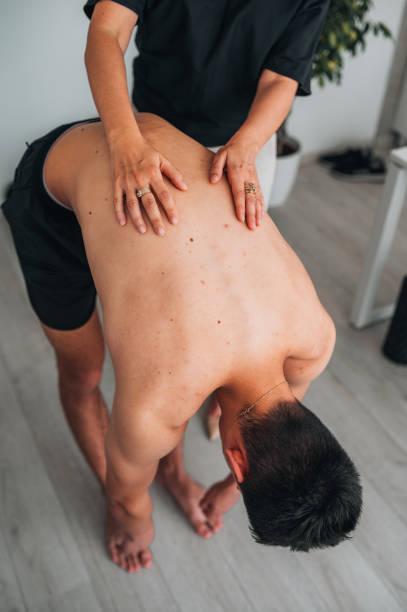
You can assess for suspected scoliosis by using the Adams’ Forward Bend Test. This is a quick and simple, non-diagnostic screening test. To perform it, bend forward from your hips while allowing your arms to hang naturally by your sides. If a structural spinal curve is present, a prominence on one side of the back may remain visible when bending forward. If the prominence you previously noticed disappears in this position, then it would be considered functional
What additional symptoms should I watch out for?
Look for signs such as uneven shoulders, hips, or waist. If you notice any of these symptoms, it is important to seek an assessment from a healthcare professional, like one of our specialist ScolioGold therapists at Scoliosis SOS.
If I am diagnosed with scoliosis, what treatment options can help?
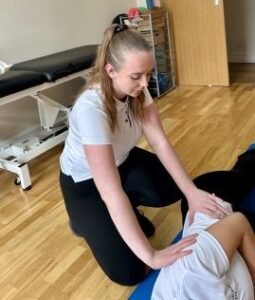
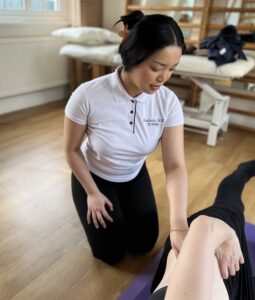
In severe cases, surgery is a recommendation, but it is important to note that there are several non-surgical approaches to managing scoliosis, including exercise and bracing. At Scoliosis SOS, we combine scoliosis-specific exercises that have roots in the Schroth method, with a range of therapeutic techniques, including massage, dry needling, and postural education.
Next Steps
If you are experiencing one-sided back pain, it is worth getting an assessment, even if other symptoms are yet to present. This will put you one step ahead of the curve, with early diagnosis being crucial to curve progression prevention! If you think your one-sided back pain could be linked to scoliosis, visit our website or give us a call to find out how we can help you, with treatment options being tailored to individuals needs and goals.
📞 02074884428
🌐 www.scoliosissos.com
📷 @scoliosissosclinic
📧 enquiries@scoliosissos.com
📍 63 Mansell Street, London, E1 8AN (headquarters)