4.9 Out of 5 based on 875 reviews

Curvatures of the spine occur when your spine has twisted and curved in an abnormal way. This may not always be related to scoliosis as other conditions (more on this below) are also categorised as curvatures of the spine. It is worth noting that everyone has a degree of curvature in the spine, but for others, there might be a significant degree of curvature which leads to appearance changes and more.
A curved spine may not be obvious, especially in the case of mild symptoms, but it can still be diagnosed. Having a curved back can lead to not only slight changes in appearance, i.e one shoulder lifts higher than the other, but it can also be painful and uncomfortable.
Different Types of Spinal Curvatures
There are different types of spinal curvatures, meaning that not all are related to scoliosis. Three different conditions that involve curvatures of the spine include:
- Scoliosis – a curved spine can indicate scoliosis, typically categorised by a sideways curve that appears in a S-shaped or C-shaped manner
- Hyperkyphosis – kyphosis is a curvature of the spine that sees the upper back appearing more rounded; front-to-back curve
- Hyperlordosis – inward curving of the lower spine or lumbar spine, often in a C-shaped curve
It is important to understand that while these three conditions are similar, they are not the same. Let’s take a look at these conditions below, including their symptoms, causes, and treatment.
What is the difference between scoliosis, hyperkyphosis and hyperlordosis?
Each of these conditions is characterised by a curvature of the spine. In order to determine whether you have scoliosis, hyperkyphosis or hyperlordosis, you will need to look at the direction and location of the curve – for example, scoliosis goes sideways, while hyperkyphosis is a forward curvature of the upper back.
To get a better understanding of the differences, let’s imagine three different people: one with scoliosis, one with hyperkyphosis, and one with hyperlordosis.
Select a condition to learn more about it:
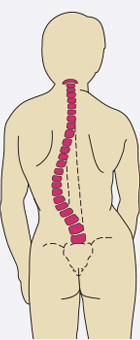
Scoliosis
Our scoliosis sufferer has a spine with an excessive sideways curve. They are probably female, since scoliosis is more common in women than in men. Unless the scoliosis patient has an underlying condition like Marfan syndrome or a Chiari malformation, their spinal curvature probably has no clear cause (this is known as idiopathic scoliosis). If this is the case – as it is around 80% of the time – it’s likely that the patient was first diagnosed with scoliosis between the ages of 10 and 15 years old.

Hyperkyphosis
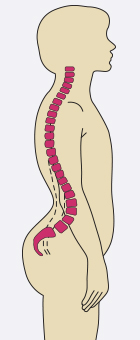
Hyperlordosis
What do these conditions have in common?
Symptoms
Certain symptoms can arise as the result of spinal curvature no matter which type you have. There’s a decent chance that all three of our imaginary patients suffer from some form of back pain, and muscular imbalance could well be a problem for each of them as well. Furthermore, any type of excessive spinal curvature is likely to have a negative impact on the patient’s flexibility and mobility, resulting in a feeling of stiffness.
Body Image
When spinal curvature is severe enough to be visible, it can cause immeasurable damage to the patient’s self-image. Low body confidence is a side-effect that’s sadly very common amongst people with curved spines, and that’s the case regardless of whether the curve goes forwards or sideways.
Treatment
All types of spinal curvature are commonly treated via surgery and/or a back brace. However, we have also found that scoliosis, hyperkyphosis and hyperlordosis can all be treated using exercise-based techniques such as those that make up our ScolioGold programme. This treatment method often elimates the need for surgical intervention, and can dramatically improve the patient’s quality of life.
Causes of Spine Curvatures
Spinal curvature can stem from all kinds of different causes. In some cases, the cause of the spine curvature might even be idiopathic, meaning that there is no known cause. Scoliosis, for instance, is often found to be idiopathic. This means that if you have a curved spine and have been diagnosed with scoliosis, it might be likely that there is no known cause for this (unless stated otherwise).
Some cases of spine curvatures can also be genetic in nature, and others can be a result of pre-existing health conditions that you may or may not have known about. To learn more about the most common causes of each spine curvature, click on a condition below.
Causes of Scoliosis
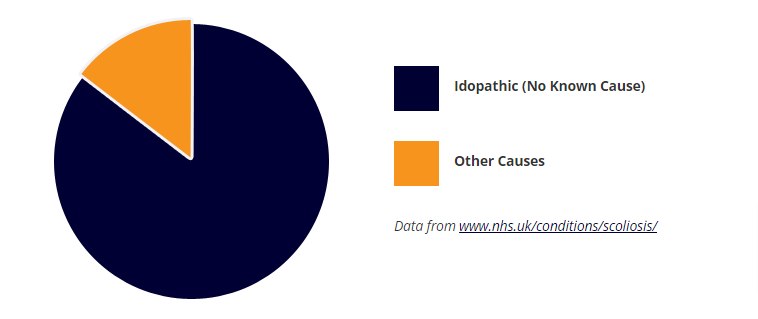
According to the National Health Service, roughly 8 out of 10 cases of scoliosis have no known cause. This is called idiopathic scoliosis, and it’s thought to be genetic in nature.
When scoliosis is not idiopathic, it may be caused by:
- Cerebral Palsy – This condition generally affects the patient’s coordination and movement, but can also cause irregular posture. Find out more here >
- Marfan Syndrome – This disorder is hereditary, and affects the body’s connective tissues, which can have an effect on the patient’s spine. Find out more here >
- Muscular Dystrophy – This genetic condition weakens muscles over time, and this gradual weakening can lead to a number of things – including the curvature of one’s spine. Find out more here >
- Birth Defects – Some scoliosis sufferers are born with the condition. Their spine developed improperly in the womb, causing the curvature of their spine. Find out more here >
Causes of Hyperkyphosis
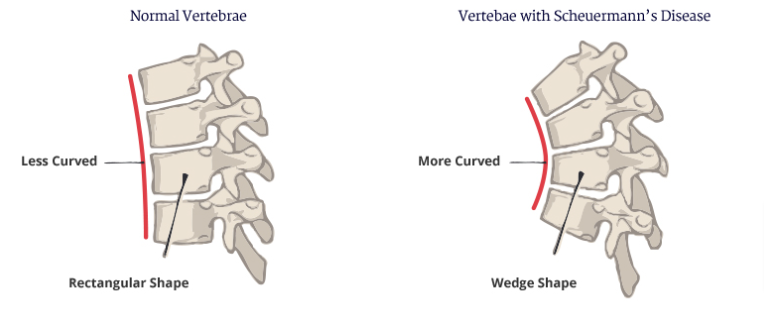
Hyperkyphosis is often the result of Scheuermann’s disease, a condition where the vertebrae (the small bones that make up the spine) develop into a wedge shape. Scheuermann’s disease commonly affects young people.
Other causes of hyperkyphosis include:
- Poor Posture – If you’re constantly slouching whilst you’re sat on a chair, you may develop hyperkyphosis later in your life.
- Congenital Issues – Sometimes, the cause of hyperkyphosis can be congenital. If a baby’s spine develops incorrectly in the womb, this may result in them developing a spinal curvature later in childhood; this will continue to progress and worsen as their spine grows.
- Underlying Conditions – Arthritis, osteoporosis, spina bifida, spinal infections, and tumours can all lead to hyperkyphosis.
Causes of Hyperlordosis
- Obesity
- Discitis (inflammation of the disc space between the bones of the spine, commonly the result of an infection)
- Achondroplasia (a disorder in which the bones do not grow normally, resulting in short stature and – in some cases – hyperlordosis)
- Sitting or standing for long periods of time
- Injury / trauma
Spinal Curvature Treatment
Treatment for spinal curvatures can depend on the severity of the curve and individual symptoms and preferences. Nonetheless, if you are seeking spinal curvature treatment, especially for scoliosis, you have come to the right place.
Consultation and Virtual Therapy
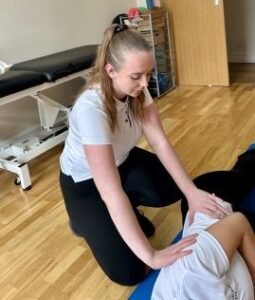
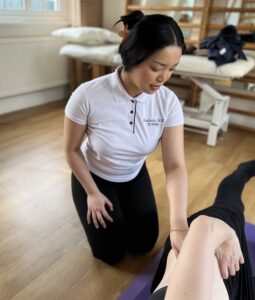
At Scoliosis SOS, we specialise in the treatment of scoliosis in both adults and children, offering a consultation to help you better understand whether our services are right for you. We provide both virtual therapy and in-person sessions to suit your preferences, allowing you to receive treatment at home.
ScolioGold and Scoliosis Exercises
Our ScolioGold therapy programme is designed as a non-invasive treatment approach and alternative to surgery, offering holistic therapy approaches that put your health and wellbeing at the forefront. This includes scoliosis exercises that are tailored to your goals and specific situation, helping to reduce spinal curvature and improve strength and mobility.

Painkillers

Bracing

Surgery

Physical Therapy
Have you been diagnosed with scoliosis? If so, then Scoliosis SOS is the specialist clinic to turn to for non-invasive and non-surgical treatment methods for scoliosis. Begin your journey to managing scoliosis and improving your health and wellbeing with our experts. Contact us today for more information or for any further enquiries.