4.9 Out of 5 based on 875 reviews


Finding a comfortable sleeping position can be challenging for people with scoliosis, particularly when pain or stiffness affects sleep. Scoliosis is a three-dimensional curvature of the spine that can influence posture and how the body is positioned, even when lying down. While there is no single sleeping position that suits everyone, certain adjustments may help support a more comfortable and neutral position during sleep.
Is there a best sleeping position for scoliosis?
As much as people would like a straight answer, there is no universally recommended sleeping position for individuals with scoliosis. The location and shape of an individual’s spinal curve, alongside symptoms and natural sleeping habits, can all affect which position feels most comfortable.
Side sleeping and sleeping on the back are commonly used positions. Research into sleep posture suggests that side lying may be associated with fewer spinal symptoms in some adults, although the available evidence is limited and does not establish one position as “best”.
The important consideration is whether your sleeping position allows your spine, head, neck and pelvis to remain comfortably supported rather than being held in an extreme position for several hours.
Sleeping on your side with scoliosis
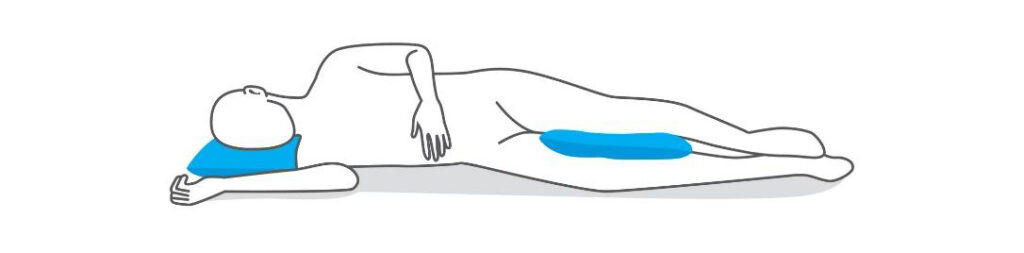
If you prefer to sleep on your side, aim to keep your spine as naturally aligned as possible. Your head should remain in line with your spine rather than being tilted towards the mattress or pushed upwards.
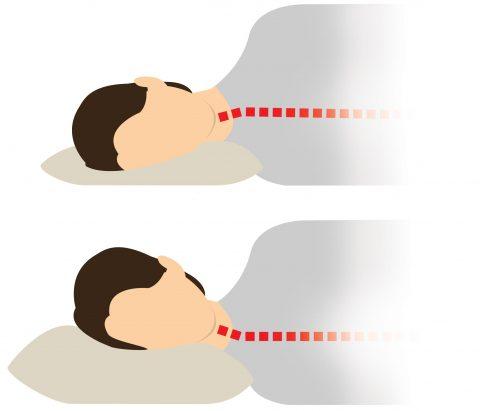
This means that pillow height is particularly important when side sleeping. A pillow that is too high can push the head away from the mattress and put strain on the neck, while one that is too low can allow the head to drop towards the mattress and may contribute to one sided neck stiffness. The correct pillow height depends on factors such as shoulder width, mattress firmness and individual body shape, so there is no single pillow thickness that works for everyone.
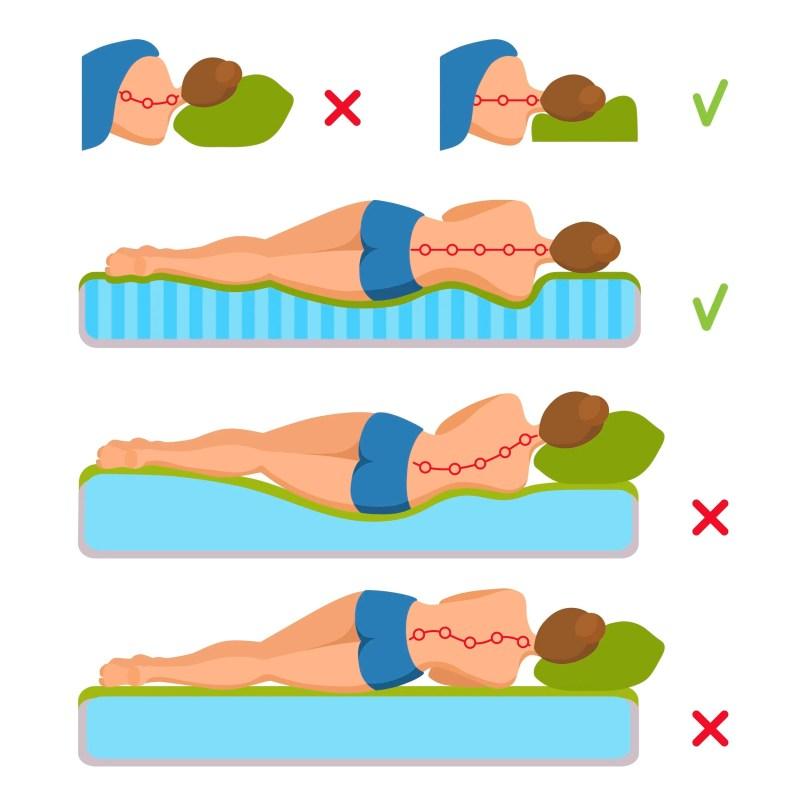
Try to keep your head and neck neutral, with your nose roughly in line with the centre of your chest rather than angled noticeably up or down. This can help avoid keeping the neck in an awkward position throughout the night.
A pillow or bolster between your knees can also be useful when side sleeping. Placing one between the knees helps prevent the upper leg from dropping forwards and rotating the pelvis. This can help keep the hips in a more neutral position and reduce unnecessary twisting through the lower back.
You may also be curious as to which side to favour in relation to your curve when sleeping with scoliosis, but there is a lack of evidence to prove that either the concavity or convexity of the curve is more beneficial. There is no evidence that any particular position will worsen or improve your scoliosis, so choose which is more comfortable and supportive..
Sleeping on your back with scoliosis
For some people, lying on the back can feel comfortable because body weight is distributed over a larger area. The aim is to allow the spine to rest naturally without excessive pressure or unsupported gaps.
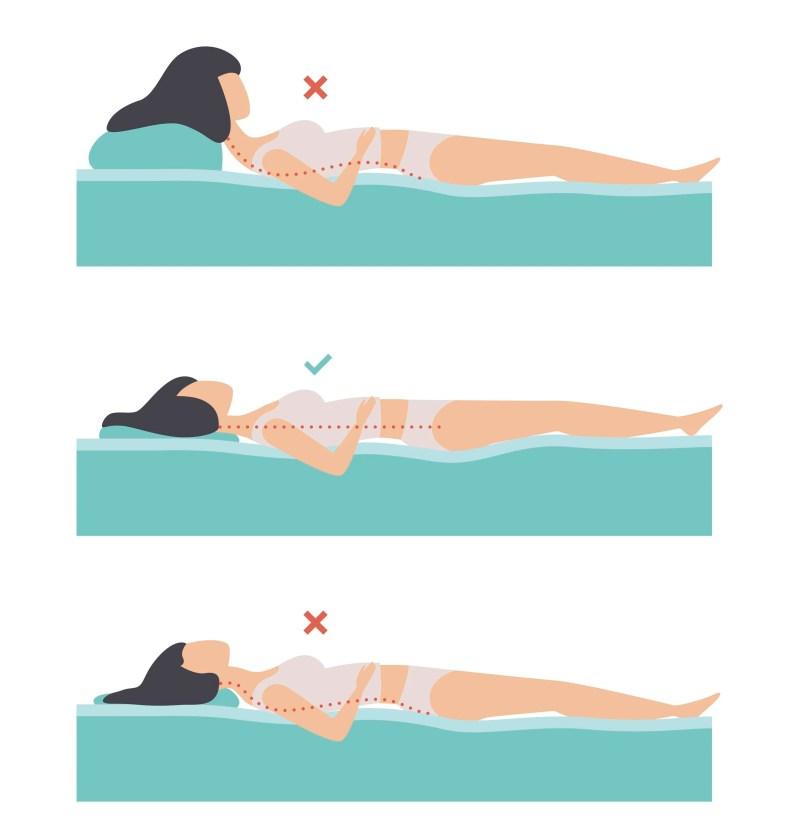
Your pillow should support your head and neck without pushing the head too far forwards. As with side sleeping, the goal is a neutral head and neck position rather than simply choosing the thickest or thinnest pillow available.
If there is an area of the body that feels unsupported, a small additional pillow may sometimes provide comfort. However, using multiple pillows underneath the head can raise the head and neck too far, or alternatively using pillows that are too flat may cause your head to tilt backwards and possibly leading to compression of the vertebrae at the back of the neck.
What about sleeping on your stomach?
Sleeping on your stomach can be less suitable for some people because the head normally needs to be turned to one side to breathe. This leaves the neck rotated for an extended period and can make it harder to maintain a neutral spinal position, which is especially important to consider in cases of cervicothoracic scoliosis. It may also impact shoulder position, which can sometimes cause discomfort.
If stomach sleeping is the only position in which you feel comfortable, changing position is not necessarily essential. However, if you regularly wake with increased neck, shoulder, or back discomfort, experimenting with side or back sleeping may be worthwhile.
Choosing the right pillow for scoliosis
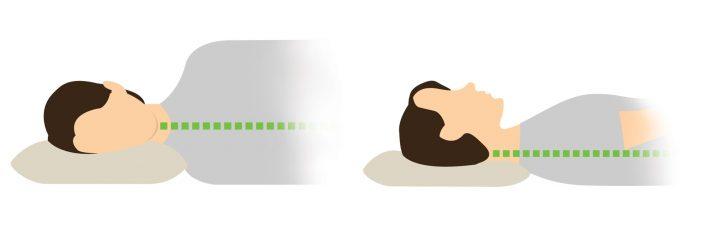
Rather than focusing on a particular brand or type of pillow, consider whether your pillow allows your head and neck to remain neutral in your usual sleeping position.
When side sleeping, the pillow generally needs to fill the space between the mattress and the side of the head without lifting the head too much. When sleeping on your back, a lower pillow may be sufficient because there is less space to fill.
Pillow comfort and spinal alignment can vary considerably between individuals. Research has demonstrated that different pillow designs can alter cervical spinal posture, meaning that choosing a suitable height and shape is more important than simply selecting a pillow marketed for a particular sleeping position
It can also be helpful to consider your mattress. A supportive sleep surface can influence spinal alignment, although research into the ideal mattress characteristics is not specific enough to establish one mattress type as appropriate for every person with scoliosis.
Finding a comfortable sleeping position
Ultimately, the most appropriate sleeping position is one that allows you to sleep comfortably while keeping your head, neck, spine, and hips well supported. Sleeping adjustments and tips, such as changing pillow height or placing a pillow between your knees, can make a difference to how your body is positioned.
If pain regularly interrupts your sleep, or you find that no sleeping position feels comfortable, it may be useful to discuss your symptoms with an appropriately qualified healthcare professional. Your individual scoliosis pattern and symptoms can then be considered when discussing ways to manage your condition.
FAQ’s
What is the best sleeping position for scoliosis?
There is no single best sleeping position for everyone with scoliosis. Side sleeping or sleeping on your back may be comfortable for many people, provided the spine, head, neck and hips are adequately supported.
What pillow height is best for scoliosis?
The ideal pillow height depends on your sleeping position and body shape. When side sleeping, the pillow should fill the space between your head and the mattress without pushing your head upwards. The aim is to keep your head and neck neutral.
Should I use a pillow between my knees for scoliosis?
A pillow between the knees can help keep the hips in a more neutral position when side sleeping by reducing rotation of the pelvis. It may also make the position more comfortable for some people.
Is sleeping on your back good for scoliosis?
Sleeping on your back can be comfortable for some people with scoliosis because body weight is distributed over a larger surface area. A suitable pillow should support the head and neck without pushing them too far forwards.
Can the wrong sleeping position make scoliosis worse?
There is not enough evidence to say that a particular sleeping position causes scoliosis to worsen. However, an uncomfortable or poorly supported position may contribute to temporary pain or stiffness, which might interfere with interventions such as physiotherapeutic scoliosis-specific exercises. If you regularly experience symptoms during or after sleep, it is worth discussing them with a healthcare professional.
Finding the Right Support for Your Scoliosis
Your sleeping position can influence comfort and spinal positioning, but there is no single position or pillow arrangement that is suitable for every person with scoliosis. An individual assessment can help identify how your spinal curve and symptoms may affect your posture and daily activities.
At Scoliosis SOS Clinic, an Initial Consultation provides an opportunity to discuss your individual condition and explore appropriate non-surgical management options. The clinic’s ScolioGold programme uses a combination of approaches tailored to the individual. You can book an initial consultation using the Online Booking System.
📞 02074884428
🌐 www.scoliosissos.com
📷 @scoliosissosclinic
📧 enquiries@scoliosissos.com
📍 63 Mansell Street, London, E1 8AN (headquarters)