4.9 Out of 5 based on 875 reviews


At Scoliosis SOS, we work with many patients before and after surgery, tailoring our treatment to each individual. While spinal fusion is still the most common surgical approach we see, an alternative called Vertebral Body Tethering (VBT) is gaining popularity—particularly among younger patients.
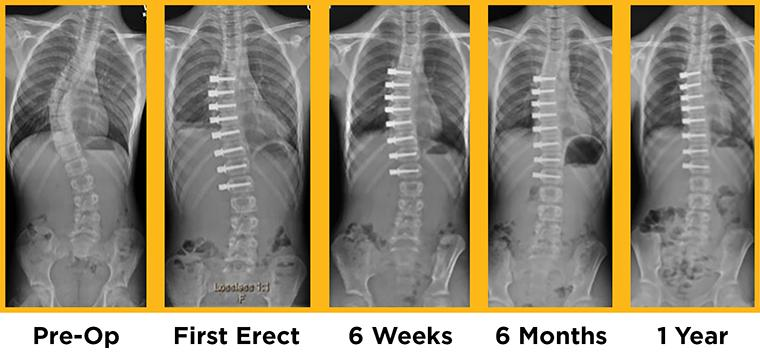
VBT has emerged over the past few years as a less invasive option aimed at preserving spinal flexibility. Unlike spinal fusion, which permanently joins parts of the spine, VBT uses a strong, flexible cord (tether) attached to the curved side of the spine using screws. As the patient grows, tension in the cord gently guides the spine into a straighter position, allowing natural movement to continue. This makes it especially suitable for children and teenagers who still have significant growth ahead.
Although VBT has been available for some time, recent advancements and accumulating clinical data have helped refine the technique. It is now recognised by NICE (the National Institute for Health and Care Excellence) and is increasingly offered in select UK centres—mainly through private providers or scoliosis specialists.
Who Can Have VBT?
Assessment involves looking at age, remaining growth, curve size, flexibility and overall health. A scoliosis specialist will use imaging, growth measurements and other assessments to determine whether VBT is appropriate.
VBT is typically considered for:
- Children or teenagers with idiopathic scoliosis
- Patients who are still growing
- Patients with curves within a range considered appropriate for VBT, often around 35–65 degrees
- Patients whose spinal curves have sufficient flexibility for the procedure to be considered
It is generally less suitable for:
- Adults or patients who have completed most of their spinal growth
- Very rigid curves
- Some patients with neuromuscular or other forms of scoliosis
- Patients whose individual anatomy or curve characteristics make VBT unsuitable
Suitability is highly individual. Being within a particular age or curve range does not automatically mean that VBT will be recommended.
Benefits and Considerations
VBT also has potential challenges and complications. It is a technically demanding procedure, and outcomes can vary between patients. Possible complications include tether breakage, overcorrection, undercorrection, changes in the spinal curve and the need for further surgery.
Because VBT relies partly on continued growth, achieving the desired correction is not guaranteed. In some cases, a patient may eventually require another procedure, including spinal fusion.
For this reason, VBT should not be viewed simply as a “better” alternative to fusion. It is a different approach with its own benefits, risks and suitability criteria.
What Does the Research Say?
Recent studies have highlighted the motion-preserving benefits of VBT. One study published in The Spine Journal (2024) found that VBT patients retained greater forward-bending (lumbar flexion) ability two years after surgery compared to those who had spinal fusion—especially when the lower vertebrae (L3–L4) were involved. Another study in the Journal of Paediatric Orthopaedics (2021) found better thoracic spine motion during backward bending in VBT patients. A 2023 systematic review on SpringerLink also reported improved post-surgical mobility.
These findings suggest that VBT may allow young patients to return to pre-surgery activities more easily, although the technique does still carry risks. Proper follow-up and experienced care teams are crucial for success.
FAQ’s
Is VBT available on the NHS in the UK?
VBT is recognised by NICE, but access on the NHS is still limited and not widely available. Most patients currently access the procedure through private healthcare or specialist scoliosis centres.
What is recovery like after VBT?
Recovery after VBT varies from patient to patient. Although VBT is designed to preserve movement and may allow a return to normal activities without the restrictions associated with spinal fusion, it is still major spinal surgery.
During the initial recovery period, patients may experience pain, tiredness and reduced mobility. Light everyday activities are generally reintroduced gradually, with more demanding activities taking longer.
The exact recovery timeline will depend on the individual and should always be guided by the surgical and rehabilitation team.
Does VBT completely correct scoliosis?
VBT aims to improve the curve rather than achieve ‘perfect straightness’. The goal is to reduce the curve while maintaining flexibility, and outcomes can vary depending on growth and individual response.
What happens if VBT isn’t successful?
VBT does not guarantee a particular degree of correction.
If the spine does not respond as expected, the curve progresses, the tether breaks or another complication develops, additional treatment may be necessary. Depending on the circumstances, this could include further VBT-related surgery or spinal fusion.
One potential advantage of VBT is that it can preserve future treatment options. However, patients should not assume that further surgery will never be necessary.
What is the success rate of VBT?
There is no single success rate that applies to every patient undergoing VBT.
Outcomes can depend on factors such as age, remaining growth, curve size, curve flexibility, the type and location of the curve, surgical technique and how the spine responds during growth.
Research has demonstrated that VBT can provide meaningful curve correction and preserve spinal motion in appropriately selected patients. However, complications and revision surgery remain possible, and long-term results are still being studied.
When discussing VBT with a surgeon, it can be useful to ask what outcomes they typically see in patients with a similar curve and stage of growth, rather than relying on one overall success percentage.
When can you return to work or school?
For teenagers, returning to school is usually approached gradually and depends on pain levels, mobility and the advice of the treating team.
For adults who undergo VBT in circumstances where it is considered appropriate, returning to work will depend on the type of job they do. Someone with a desk-based role may be able to return sooner than someone whose work involves heavy lifting, prolonged standing or physical activity.
Rather than following a fixed timetable, patients should follow their surgeon’s specific advice and build their activity levels gradually.
Can you travel after scoliosis surgery?
Travel after VBT may be possible once the patient is sufficiently recovered, but the timing should be discussed with the surgical team before making plans.
Short journeys may be manageable relatively early in recovery, while longer car journeys or flights can be more demanding because of prolonged sitting and reduced mobility.
Patients should consider:
- How comfortable they are sitting for extended periods
- Whether they can move around regularly
- How they will manage luggage
- Access to medication and medical care
- Whether travel insurance provides appropriate cover
- Whether their surgeon has cleared them to travel
Flying soon after surgery may require additional consideration, so patients should always obtain individual medical advice before travelling.
What should you expect during the first year after VBT?
The first year following VBT is an important period because the spine continues to respond to the tether as the patient grows.
Follow-up appointments and imaging are used to monitor the spinal curve, growth and overall progress. The amount of correction achieved can vary considerably between individuals.
During the first year, patients may experience:
- Gradual changes in the spinal curve
- Continued recovery from surgery
- Increasing mobility and activity levels
- Changes in the appearance of the back as correction develops
- Ongoing monitoring for complications or changes in the tether
Because VBT is designed to work alongside growth, the final result may not be immediately apparent after surgery.
Will Scoliosis Progress After VBT?
VBT aims to reduce the spinal curve and influence how the spine develops during remaining growth, but it does not guarantee that scoliosis will never change again.
Some patients achieve significant and lasting correction, while others may experience undercorrection, overcorrection or progression of the curve. Tether breakage can also occur and may affect the outcome.
This is why long-term follow-up is an important part of VBT treatment. If the desired correction is not achieved, or if a significant complication develops, additional treatment may be required.
In some cases, spinal fusion remains an option later if it becomes necessary.
What Are the Long-Term Results of VBT?
The long-term results of VBT continue to be investigated.
One of the main reasons patients and families consider VBT is the potential to maintain more natural spinal movement than would be possible following fusion. Research has provided encouraging evidence that VBT can preserve spinal flexibility while achieving meaningful curve correction in appropriately selected patients.
However, VBT is a relatively newer approach compared with spinal fusion, meaning there is less long-term evidence available. Patients should therefore consider both the potential benefits and the uncertainties when discussing their options with a specialist.
Long-term follow-up is particularly important for identifying changes in the curve, tether-related complications and whether further surgery is required.
Questions to Ask Before Considering VBT
If VBT is being discussed as a potential treatment option, patients and families may find it useful to ask their scoliosis specialist:
- Am I or my child a suitable candidate for VBT?
- How much growth do I or my child have remaining?
- How flexible is the spinal curve?
- What level of correction would you realistically expect?
- What are the potential risks and complications?
- How often do your patients require further surgery?
- What is the expected recovery timeline?
- When could I or my child return to school, work, exercise and sport?
- When would it be safe to travel?
- How often will follow-up appointments and X-rays be needed?
- What happens if the tether breaks?
- What happens if the spine becomes overcorrected or undercorrected?
- Could spinal fusion still be required in the future?
- What long-term results have you seen in patients with a similar curve?
Having a detailed discussion with the treating team can help patients and families understand whether VBT is appropriate and what to expect both immediately after surgery and in the years that follow.
Final Thoughts
Vertebral Body Tethering offers a promising, mobility-preserving alternative to spinal fusion for the right candidates. While not suitable for everyone, it represents an exciting step forward in scoliosis treatment. If you think VBT might be an option for your child, speak to a scoliosis specialist who understands the latest techniques and patient criteria in the UK.
Contact Us
If you would like to know more about Vertebral Body Tethering (VBT) or discuss your child’s scoliosis treatment options, we’re here to help.
📞 02074884428
✉️info@scoliosissos.com
📸 @scoliosissosclinic (Instagram)