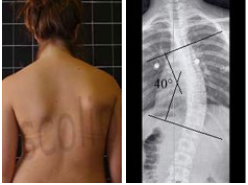
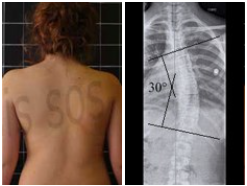
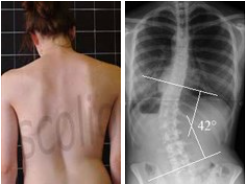
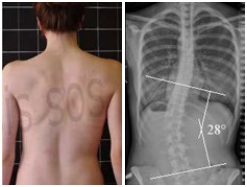
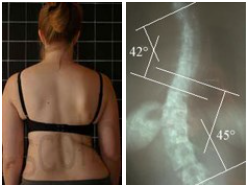
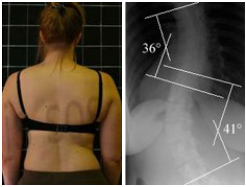
Before & After X-Rays (Cobb Angle Reduction)
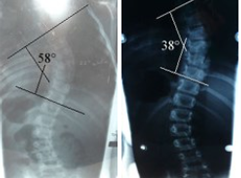
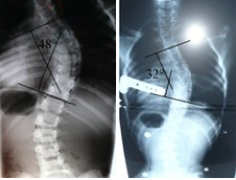
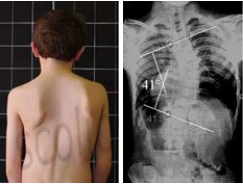
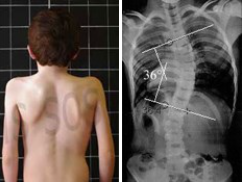
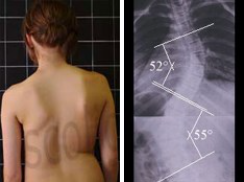
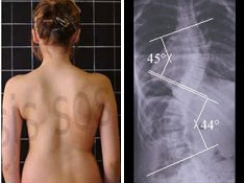
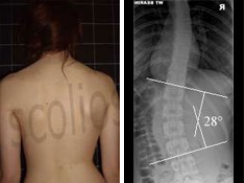
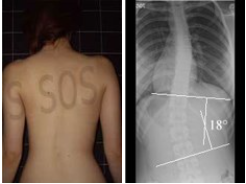
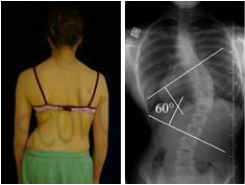
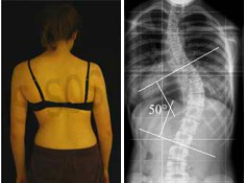
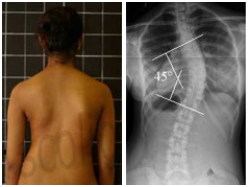
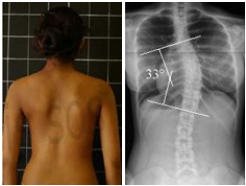
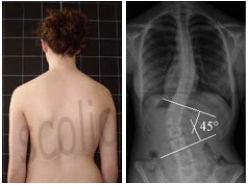
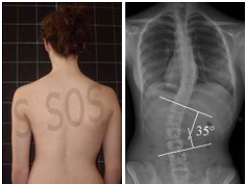
The Cobb angle is a widely-used method for measuring the severity of scoliosis: the larger the angle, the more severe the patient’s spinal curvature. Cobb angle reduction is one of the main aims of our ScolioGold therapy courses; we endeavour to decrease each patient’s Cobb angle via non-surgical treatment methods such as osteopathy and the Schroth method. Reducing the Cobb angle improves both the patient’s posture and their overall quality of life – all without the need for invasive surgical procedures.
Below are some examples of the results that our scoliosis treatment programme can produce. Each example includes a before and after photo of the patient in question, along with X-rays to clearly show the Cobb angle reduction achieved.
If you’d like to find out more about scoliosis treatment courses, please get in touch today.
Patient 1 (7 years old)
Before Treatment 58°
After 4 Weeks 48°
Patient 2 (11 years old)
This patient’s xrays were taken independently at the Nuffield Orthopaedic Centre, Oxford and Cobb angle measurements were made by orthopaedic consultant Mr Nnadi. Due to his age, this patient is being regularly monitored by Mr Nnadi and Scoliosis SOS.
Before Treatment 41°
After 4 Weeks 36°
Patient 3 (12 years old)
This patient’s xrays were taken independently at the Royal Devon & Exeter Hospital and Cobb angle measurements were made by orthopaedic consultant Mr Hutton, who is supporting the family’s decision to pursue a non-surgical treatment option. Due to her level of skeletal immaturity she is being regularly monitored by Mr Hutton and Scoliosis SOS.
Before Treatment 52° & 55°
After 4 Weeks 45° & 44°
Patient 4 (13 years old)
This patient’s xrays were taken independently at Epsom General Hospital and Cobb angle measurements were made by orthopaedic consultant Mr Dabis. He is very pleased with her results and has advised her to carry on with the good work.
Before Treatment 28°
After 4 Weeks 18°
Patient 5 (14 years old)
This patient’s xrays and Cobb angle measurements were taken independently at the Royal Children’s Hospital, Melbourne (Australia). The 10 degree reduction achieved following ScolioGold treatment has been maintained for the last 3 years, as substantiated by yearly xrays.
Before Treatment 60°
After 4 Weeks 50°
Patient 6 (15 years old)
This patient’s xrays were taken independently at the Royal National Orthopaedic Hospital, Stanmore and Cobb angle measurements were made by orthopaedic consultant Mr Lehovsky. Following her hospital check-up appointment in March 2008, she was discharged as spinal fusion surgery was no longer required, due to her reduction in Cobb angle as a result of ScolioGold treatment.
Before Treatment 45°
After 4 Weeks 33°
Patient 7 (15 years old)
Before Treatment 45°
After 4 Weeks 35°
Patient 8 (15 years old)
Before Treatment 40°
After Treatment 30°
Patient 9 (16 years old)
Before Treatment 42°
After 4 Weeks 28°
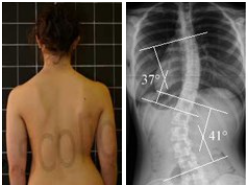
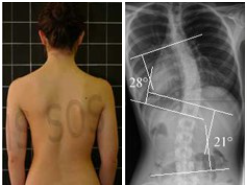
Patient 10 (18 years old)
This patient’s xrays were taken independently at the Royal National Orthopaedic Hospital, Stanmore and Cobb angle measurements were made by orthopaedic consultant Mr Noordeen, she has been discharged as spinal fusion surgery is no longer required, due to her 50% reduction in Cobb angle as a result of ScolioGold treatment.
Before Treatment 37° & 41°
After 4 Weeks 28° & 21°
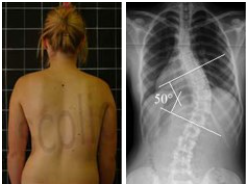
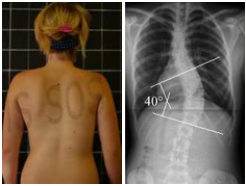
Patient 11 (18 years old)
Before Treatment 50°
After 4 Weeks 40°
Patient 12 (19 years old)
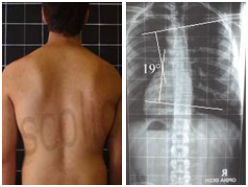
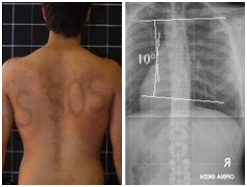
This patient’s xrays and Cobb angle measurements were taken independently at a hospital in Athens (Greece). The 50% reduction of Cobb angle achieved using ScolioGold treatment has decreased his spinal deviation to a level where clinically it can no longer be classified as scoliosis.
Before Treatment 19°
After 4 Weeks 10°
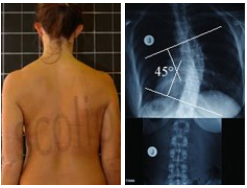
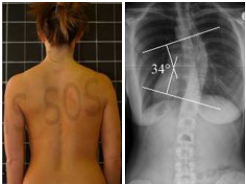
Patient 13 (32 years old)
Before Treatment 45°
After 4 Weeks 34°
Patient 14 (36 years old)
Before Treatment 42° & 45°