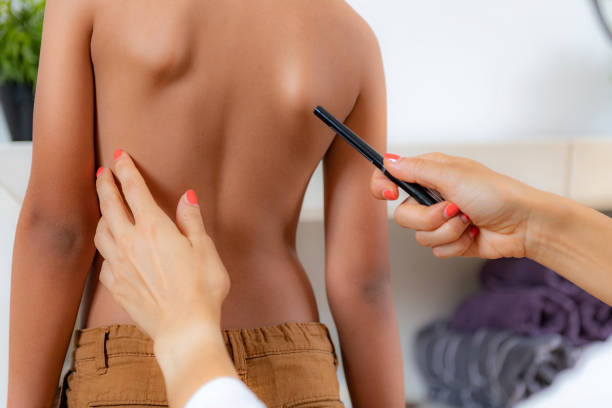
If you’ve noticed that your child seems to lean to one side when standing or walking, or that their posture looks uneven from behind, it’s understandable to be concerned. Often, parents first spot small changes such as one shoulder appearing higher than the other, an uneven waistline, or a tendency to stand with their body shifted to one side.
While poor posture can sometimes make the body look uneven, a persistent lean may be a sign of scoliosis. Scoliosis is a condition that causes the spine to curve and rotate, which can affect the body’s overall balance and alignment. As the curve develops, the body may appear to lean to one side, even when they are trying to stand up straight.
These changes are often subtle at first and may be more noticeable when wearing fitted clothing, swimwear, or a school uniform. In many cases, children do not experience pain, which is why visual signs are often the first clue that something isn’t quite right.
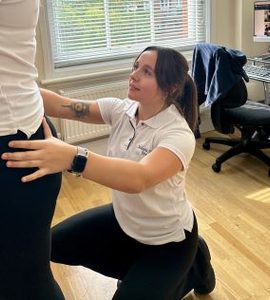
If you’re concerned about your child’s posture, a professional consultant can help identify whether a spinal curve is present. Early assessment is important, particularly during periods of rapid growth when scoliosis is most likely to progress.
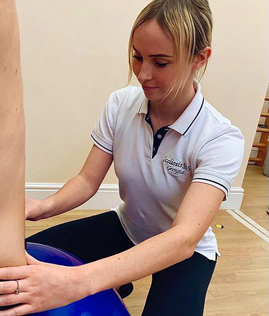
For children diagnosed with scoliosis, specialist (physical) therapists are often recruited to educate around scoliosis-specific exercises, and specialist orthotists may be considered to design and fit bespoke scoliosis braces for moderate curvatures.
FAQs
Why does my child lean to one side when standing?
A child may lean to one side for several reasons, including postural habits, muscle imbalances, leg length differences, or scoliosis. If the lean is consistent and doesn’t improve when they stand straight, it is worth having it assessed.
What are the signs of scoliosis in children?
Common signs include uneven shoulders, uneven hips, a prominent shoulder blade, or the body appearing to lean to one side.
How is scoliosis assessed in children?
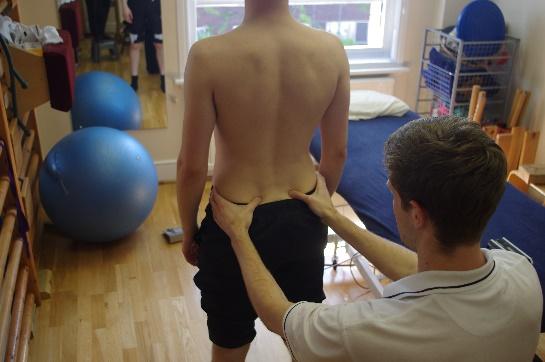
A specialist will examine your child’s posture and spinal alignment and may recommend imaging if scoliosis is suspected. This helps determine whether a spinal curve is present and whether treatment is needed.
What treatments are available for young patients with scoliosis?
Depending on the child’s age and the severity of the curve, treatment may involve monitoring, scoliosis-specific exercises, or bracing. Early intervention can often help manage progression during growth.
Find out More
If you’ve noticed that your child’s posture appears uneven or they seem to lean to one side, our team can help. You can book an Initial Consultation with a specialist, learn more about the ScolioGold Method, or view our Results Gallery to see how children and adults have responded to the treatment and the Patient Outcomes.
📞 02074884428
🌐 www.scoliosissos.com
📷 @scoliosissosclinic
📧 enquiries@scoliosissos.com
📍 63 Mansell Street, London, E1 8AN (headquarters)