4.9 Out of 5 based on 875 reviews

Experiencing rib pain when bending or leaning sideways can feel sharp, uncomfortable, and sometimes worrying – especially if it keeps coming back or only occurs on one side. While there are many possible causes of this type of discomfort, one underlying issue that often goes unnoticed is scoliosis.
In this article, we’ll explore why rib pain can occur during side bending, how it may relate to spinal alignment, and when it’s worth seeking professional help.
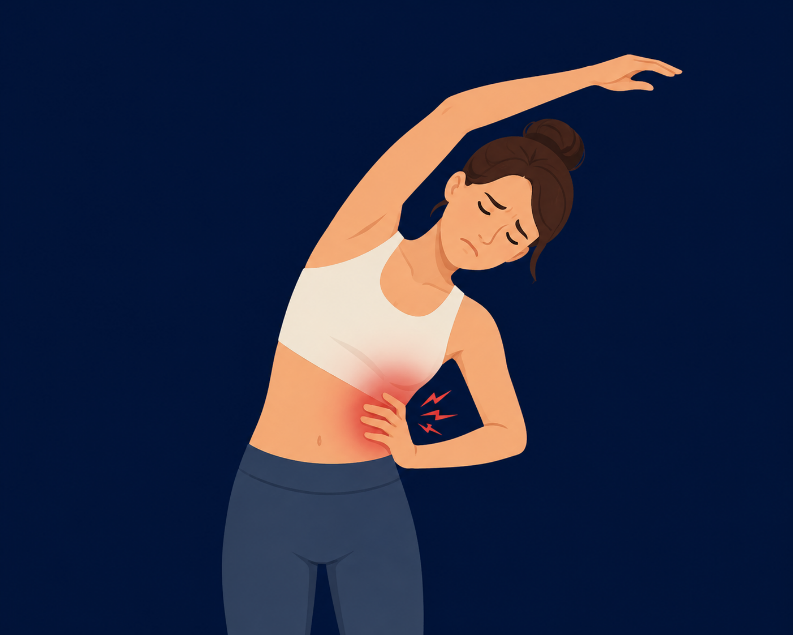
So Why Does Rib Pain Occur When Bending Sideways?
When you bend your body to the side, your ribs, spine, and surrounding muscles all need to move in a coordinated way. If something disrupts that movement, such as tight muscles, joint irritation, or structural imbalance, you may feel pain.
In some cases, the discomfort is muscular. However, if the pain feels uneven (for example, always on one side), or is accompanied by visible changes in posture, there may be more going on beneath the surface.
Understanding the Link to Scoliosis
Scoliosis is a condition where the spine curves sideways instead of running straight down the back. This curvature often includes a twisting motion, which can affect the rib cage as well as the spine.
Because the ribs are attached directly to the spine, any rotation or curvature can shift their position. This may lead to:
- Increased pressure on one side of the rib cage
- Muscle imbalances around the torso
- Uneven movement when bending sideways
As a result, one side of the ribs may feel tighter, more compressed, or even painful, especially during movement like side bending. In some individuals, scoliosis can also cause a visible prominence of the ribs on one side, particularly when bending forward or sideways. In more severe cases, where the spinal curvature causes the body to collapse heavily into one side, there may be some contact between the ribs and hips causing compression or pinching pain.
Why the Pain Is Often One-Sided
A key feature of scoliosis is asymmetry. The spine curves and rotates, which creates uneven forces throughout the body.
This can mean that:
- One side of the rib cage is compressed
- The opposite side is stretched or overworked
- Muscles on each side function differently
Over time, this imbalance can lead to irritation or strain, which often becomes exacerbated during asymmetrical movements.
When the spine curves to the left, it is known as levoconvex scoliosis. In this case, the muscles between the ribs on the right-hand side (the concavity of the curve) will be compressed, compared to the overstretched muscles on the left-hand side.
Other Symptoms to Watch For
If rib pain when bending sideways is related to scoliosis, you might also notice:
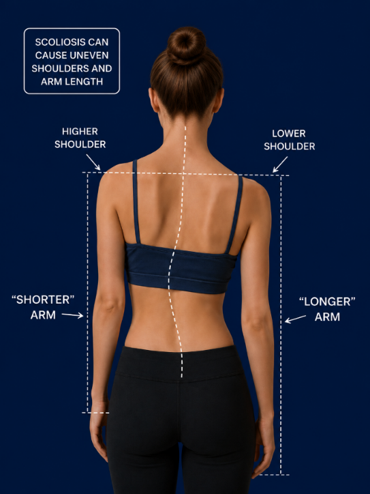
- Uneven shoulders or hips
- A waistline that looks different on each side
- One side of the rib cage appearing more prominent
- A feeling of stiffness or restriction in certain movements
These changes can develop gradually, so they’re not always obvious at first.
When Should You Seek Help?
Occasional rib discomfort can happen to anyone. However, it’s worth getting checked if:
- The pain keeps returning
- It’s always on the same side
- You notice visible asymmetry in your body
- Movement feels restricted or uncomfortable
Early assessment is important because scoliosis can progress over time, particularly if left unaddressed. In more significant cases, it can even lead to ongoing pain or breathing difficulties due to rib cage changes.
FAQs
Is rib pain when bending sideways always caused by scoliosis?
No, not always. Rib pain can also come from muscle strain, joint irritation, or minor injuries. However, if the pain is persistent or one-sided, scoliosis is a possibility worth investigating.
How can I tell if my rib pain is related to my spine?
Look for signs of asymmetry, such as uneven shoulders, a shifted waist, or a rib prominence. If these are present alongside pain, your spine may be contributing to the issue.
Can physiotherapy help rib pain linked to scoliosis?
Yes, physiotherapy is commonly used to manage scoliosis-related discomfort. Targeted exercises can improve posture, reduce muscle imbalance, and help relieve pressure on the ribs. Consistency with scoliosis-specific exercises is key to achieving treatment goals!
Take the Next Step
If you’re experiencing rib pain when bending sideways and suspect it might be more than a simple strain, it’s important to get expert advice.
The team at Scoliosis SOS specialises in assessing and treating scoliosis-related symptoms using tailored physiotherapy approaches. Booking an initial consultation could help you understand the root cause of your pain and start working towards lasting relief.
Don’t ignore persistent discomfort, early support can make a real difference.
📞 02074884428
🌐 www.scoliosissos.com
📷 @scoliosissosclinic
📧 enquiries@scoliosissos.com
📍 63 Mansell Street, London, E1 8AN (headquarters)