4.9 Out of 5 based on 875 reviews

International Scoliosis Awareness Day is held annually on the last Saturday of June (so this year, that will be June 27th), serving as the highlight of Scoliosis Awareness Month, which is always held in June. Scoliosis Awareness Month strives to address the growing need for public education and awareness around scoliosis, considering its often-under-looked prevalence within society. Early detection, patient support, and development of community between patients and families are other key aims of the cause.

So What is Scoliosis?
Scoliosis is a condition that causes a sideways curvature of the spine, which can range from mild to severe. It is a three-dimensional condition, so not only is there lateral shifting of the spinal column, but rotation of the vertebrae and attachments too. This can lead to other issues separate from visible asymmetries, due to potential mechanical constraints and compression on comprehensive systems of the body. There are many different types of scoliosis with different causes, for example: idiopathic scoliosis (unknown cause), congenital scoliosis (present at birth due to spinal development differences), neuromuscular scoliosis (linked to conditions such as cerebral palsy or muscular dystrophy), and degenerative scoliosis (which develops later in life). It is most frequently diagnosed in adolescence (up to 80% of cases) due to spine development during growth spurts, but can affect people of any age, highlighting the need to reduce stigma, increase understanding, and highlight the options available to those affected.
Different Experiences with Scoliosis
As Scoliosis Awareness Month strives to increase awareness, its important share what those with the condition might experience, and that each experience differs from person to person. As mentioned, severity frequently varies, but severity and pain do not directly correlate. Not everyone with severe curves will experience pain, and not everyone with mild curves will be pain-free. Fatigue, pain, and reduced mobility are possible for anyone with scoliosis, but is not inevitable, so it is vital to take a personalised approach to treatment, tailoring care to the individual’s needs. Emotional and psychological impacts are also common, particularly among young people navigating body image concerns, which presents the need for a multi-faceted approach to scoliosis care.
Experiences of living with scoliosis fluctuates between people, but experiences with scoliosis treatment does too. With a plethora of options available, both surgical and non-surgical, individual experiences may all look completely different. Some non-surgical management options are less widely known or available on services like the NHS, so increasing awareness of the possibilities is crucial. Surgery is only recommended for more severe cases, with bracing and physiotherapy being recommended as the main conservative methods for posture correction and symptom management – each having their own array of methods.
How You Can Help During Scoliosis Awareness Month
The National Scoliosis Awareness Month Campaign objectives are based around early detection, public awareness, patient advocacy and community partnerships. Actionable support can be undertaken by wearing a green ribbon throughout the awareness month – this not only represents Scoliosis Awareness Month and your advocacy, but sparks conversation regarding the campaign. Other supportive options include sharing accurate information about scoliosis as this helps dispel myths and encourages early screening. Supporting friends or family members with scoliosis, whether through understanding, encouragement, or simply listening, can make a meaningful difference in their experience.

How Our Clinic Can Support You
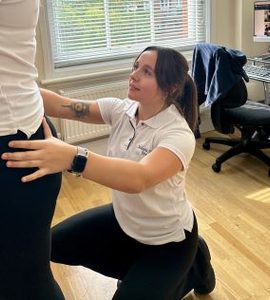
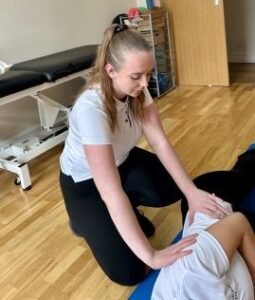
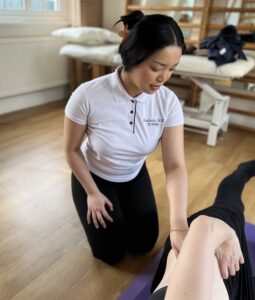
At Scoliosis SOS, we focus on personalised, evidence-based non-surgical scoliosis care, combining an array of physiotherapy methods to create a gold-standard treatment approach, known as the ScolioGold Method. We have specialist equipment and professionals to help with assessment, treatment, and aftercare for our tailored exercise and support programmes that aim to help with posture improvements, progression risk reduction, and spinal health enhancement.

You do not need to navigate scoliosis alone. Early intervention and the right support can significantly improve quality of life. Get in touch with our team to learn more about how we can help you take a proactive, non-surgical approach to scoliosis management.
Together, we can raise awareness, support those affected, and empower individuals to take back control of their spinal health.
📞 02074884428
🌐 www.scoliosissos.com
📷 @scoliosissosclinic
📧 enquiries@scoliosissos.com
📍 63 Mansell Street, London, E1 8AN (headquarters)