4.9 Out of 5 based on 875 reviews

As we age, our bodies change in ways that can sometimes take us by surprise. One such condition that can develop or worsen later in life is scoliosis—a sideways curvature of the spine. While many associate scoliosis with children or adolescents, it’s important to recognise that older adults can develop or will continue to live with scoliosis, and it can significantly impact their quality of life.
What is scoliosis in older adults and why?
Scoliosis in older adults generally falls into two categories:
Degenerative (De Novo) Scoliosis: This develops as a result of age-related changes in the spine. As we age, spinal discs lose moisture and this can lead to imbalances which can then cause the spine to curve. Examples of conditions that may lead to scoliosis include disc degeneration, arthritis, or osteoporosis. It typically occurs after age 50 and is often linked to spinal stenosis or loss of bone density.


Progressive Idiopathic Scoliosis: Some older adults have been diagnosed with scoliosis in childhood or adolescence (idiopathic scoliosis) and notice that their curve starts to get worse as they age due to natural spinal wear and tear as well as the increased risk of additional diseases. The rate and risk of progression can depend on many factors including severity and location of the curve.

Symptoms
Older adults with scoliosis may experience a range of symptoms that can vary in severity:
- Chronic back pain
- Leg/hip pain, weakness or altered sensation due to spinal nerve compression
- Uneven shoulders or hips
- “Humps” / more prominent rib cage on one side at the back or front.
- Difficulty standing upright or walking
- Fatigue, especially after physical activity
- Restricted breathing

It’s important to note that scoliosis doesn’t always cause pain, but when it does, the effects can be life-altering. It is not always obvious so in some cases it might be missed until the symptoms get worse.
Why It Matters in Older Age
Age-related scoliosis isn’t just a cosmetic issue—it can affect mobility, balance, and independence. Untreated or progressive scoliosis can also impact lung function, digestion, and the ability to perform daily activities.
Because older adults are more likely to have coexisting conditions (such as arthritis, osteoporosis, or cardiovascular issues), managing scoliosis requires a careful and personalised approach.
Diagnosis:
It is important for older adults to seek evaluation as soon as they notice persistent back issues as it is usually more than just identifying a curve in the spine. Many older adults will have co-existing conditions, therefore getting an accurate picture of what is causing the symptoms is crucial for planning the treatment.
During the consultation the doctor will ask about your medical history then carry out a physical examination. The most common test used to identify scoliosis is the Adams Forward Bent Test which will allow the doctor to see if the rib cage is rotated.
In some cases, the doctor will then suggest an X-ray to confirm or determine the severity of the curve. An MRI, CT or DEXA scan may also be considered if there are co-existing conditions.
Treatment: Managing scoliosis as an older adult
For the majority of older scoliosis patients, the aim is to manage their condition rather than cure it and the treatment will differ from patient to patient…
Conservative (non-surgical) treatment options
Exercise based therapy like our ScolioGold treatment programme will target the imbalances and can help reduce pain, improve mobility and prevent the curve from getting worse.
Pain management: Doctors may prescribe painkillers or anti-inflammatories to patients who are in a lot of pain to enable them to be able to perform day to day tasks more comfortably, however this alone will not help to prevent the condition from getting worse.
Injections: For individuals with co-existing conditions like spinal stenosis or a disc bulge, they may also experience nerve compression. These patients may be offered epidural steroid injection, facet joint injection or nerve blocks to help reduce inflammation or target localised pain.
Bracing: Although it is not very common in older adults, there are some cases in which a soft brace may be recommended to help stabilise and support the spine. This can also help to reduce muscular fatigue during day-to-day activities. Hard braces are rarely prescribed due to the limited benefit and discomfort they would likely cause.
Surgical treatment
Surgery is very uncommon in older adult patients and will only be considered if the curve is progressing at a fast rate or if there is compression on the nerves.
The types of surgery may include spinal fusion, decompression and vertebral column resection or osteotomy.
Takeaway message:
You don’t have to live in pain.
Scoliosis in older adults can occur as a result of inevitable changes in the body but it can be managed with the right support.
Our scoliosis treatment courses, which also include virtual therapy and in-person sessions, offer the flexibility and convenience of professional scoliosis treatment from scoliosis specialists.
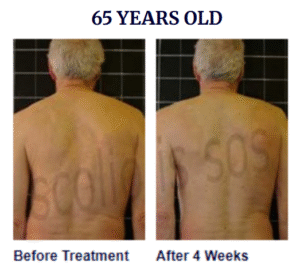
Pre and Post treatment examples with Scoliosis SOS patients

Are you concerned about age-related changes in your back, posture or spine?
Why don’t you come along and see one of our friendly, expert scoliosis consultants for an Initial Consultation and find out how we can help you manage your condition and symptoms.
Contact Us or call 0207 488 4428