4.9 Out of 5 based on 875 reviews

When an individual is diagnosed with scoliosis, spinal consultants may recommend that the patients receive spinal fusion surgery, especially if the curve has progressed beyond a particular point and the individual is still growing. Although spinal surgery has benefits in correcting the curvature and preventing progression, surgery is invasive and it is considered a major operation, requiring a long recovery time. Therefore, we understand patients may feel pressured into having the surgery, without being aware of all of the other treatment methods that have been scientifically proven to prevent progression of the scoliosis and even reduce the patients Cobb Angle. The purpose of this post is to provide you with some education on the different treatment options, so you can make the best decision for you and your loved ones.
Bracing
When an individual is diagnosed with idiopathic scoliosis (which usually arises in puberty) and their cobb angle is between 24-40 degrees, a rigid back brace may be prescribed. Whilst bracing doesn’t help to correct the curvature, it is effective in preventing progression of the curve.
The process of bracing:

- If you have been prescribed a brace, a cast will be taken of your back, so the brace can be moulded specifically to your body and the direction of the curvature.
- If you have a milder curve, a flexible brace may be prescribed to you, however if your curve is more severe, you will likely have a rigid plastic one.
- You will have an individualised plan of when you should wear the brace, often you may have to wear it for up to 23 hours a day, however in certain cases you may only have to wear it whilst sleeping. Again, the timescale that you have to wear your brace for will be determined from how much growth-time you have and your age.
- If you have been prescribed a brace but are worried about it being visible through your clothes, most common braces now are designed to not be visible through clothing!
Bracing has many positives and is a very common strategy in preventing progression of the curve, however, this form of treatment can come with some challenges as well.
Challenges of Bracing:
- Bracing requires high compliance from the individual, and younger people may find it difficult to stay in a brace 23 hours a day, especially whilst being at school.
- Although each brace is designed to fit each individual comfortably without causing them any pain, younger people can grow at a rapid rate and therefore they may grow out of their brace quickly which can cause them discomfort.
- Due to the immobilisation of the spine during bracing, the surrounding muscles that support the spine therefore become weakened and atrophied as they aren’t being used. This can sometimes mean a reduction is muscle which may lead to a lack of correctional benefits leading to progression of the patient’s spine post-bracing treatment.
If you already wear a scoliosis brace, it is still recommended that you participate in Physiotherapeutic Scoliosis-Specific Exercises (PSSE) to maintain flexibility in your spine, whilst correcting the curvature and increasing muscular support around your spine.
Physiotherapeutic Scoliosis-Specific Exercises
If you are trying to avoid surgery, participating in a PSSE course may be suitable for you, with or without bracing. It has been proven highly effective in preventing progression of curves, and improving asymmetries and the struggles that come with scoliosis.
SEAS Method
The SEAS method stands for Scientific Exercise Approach to Scoliosis and is a specific form of active self-correction, tailored individually to each patient, which is then complemented by stabilisation exercises. The exercises included in the method focus on improving neuromuscular control, proprioception and balance. This method has been scientifically proven to be an alternative to surgery, as it requires patients to minutely control their muscles without the restriction of a brace or complicated exercises. For this reason, we use this method in conjunction with our ScolioGold treatment here at Scoliosis SOS.
Schroth Method
The Schroth Method is an exercised based physiotherapy programme and has helped countless people to improve their posture and symptoms of scoliosis. This method uses stretches and exercises that develop muscles around the rib cage and correct spinal abnormalities, through methods such as breathing into collapsed areas and using passive corrections to de-rotate the spine. Due to the success of this world-renowned treatment method, here at Scoliosis SOS, we also combine this method with a variety of others to create our ScolioGold Treatment.

ScolioGold
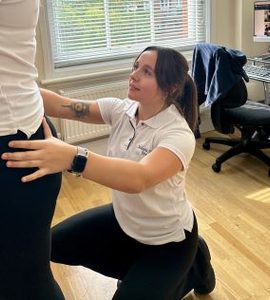
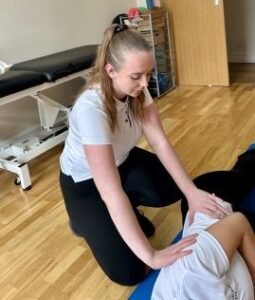
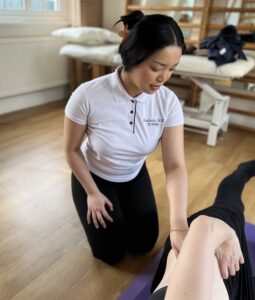
Here at Scoliosis SOS, we provide ScolioGold treatment to our patients, with our main aim being to help individuals maintain a more central posture during everyday activities. Our treatment at Scoliosis SOS clinic involves education and exercise therapy individualised to each patient, influenced by a variety of non-surgical spinal treatments from around the world. Each programme is tailored to unique needs of our patients and helps to maintain a more central posture, improve muscle strength around the spine, all whilst reducing pain and curve progression. The use of our methods has successfully allowed 88% of our patients to avoid the need for spinal surgery.
So, if your aim is to avoid surgery, increase muscle stability whilst being in a brace, or increasing spinal function post-surgery, our ScolioGold method will focus on all of your needs. If you suffer from scoliosis and would like to know more about how our treatment can help you, please get in touch to find out more.