4.9 Out of 5 based on 875 reviews

Scoliosis is a condition characterised by a sideways curvature of the spine, most commonly identified during adolescence. While the human spine naturally has gentle curves and is not perfectly straight in everyone, when the sideways curvature measures 10 degrees or more, it is clinically defined as scoliosis. In many cases, early changes are subtle and may go unnoticed without routine observation or screening. This blog post explains the early signs of scoliosis, how it is medically assessed, and why timely diagnosis is clinically important.
Recognising and Assessing Scoliosis
Scoliosis is a three-dimensional spinal curvature. Rather than simply curving from side to side, the spine may also rotate, which can cause visible asymmetry in the shoulders, ribs or hips. The most common form is Adolescent Idiopathic Scoliosis, which typically develops between the ages of 10 and 18 without a clearly identifiable cause.
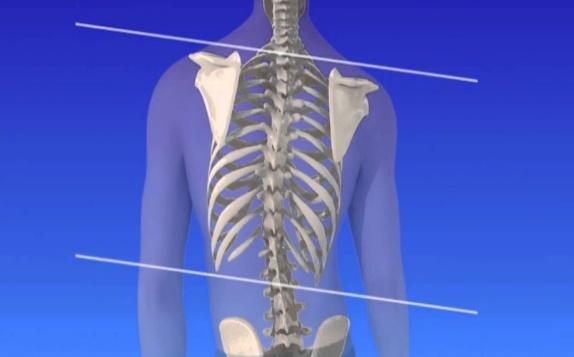
Others may progress during periods of rapid growth. This form of scoliosis occurs more frequently in girls than boys, particularly during phases of rapid development such as early puberty. A family history of scoliosis may also increase the likelihood of developing the condition, suggesting that genetic factors can play a role.
Early Signs to Look Out for
Early signs are usually related to posture imbalance. Parents or individuals may notice one shoulder appearing higher than the other, one shoulder blade more prominent, or one hip sitting unevenly. Clothing may hang unevenly, and the waistline may appear asymmetrical. These changes are often painless, which is why visual observation plays such an important role in early detection.
Checking at Home
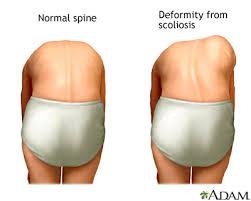
Simple screening tests can highlight possible asymmetry. The forward bend test (sometimes called Adam’s test) involves bending forward at the waist while someone observes the back from behind. A visible rib hump or unevenness may suggest spinal rotation, however this is just an indicator, clinical screening is needed to confirm diagnosis.
Medically Diagnosing Scoliosis
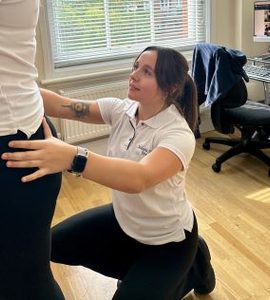
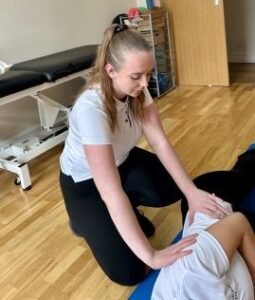
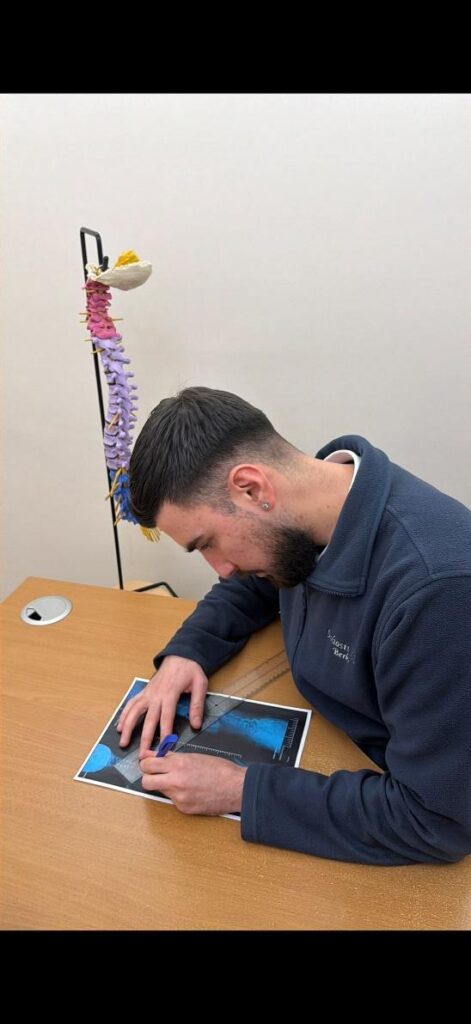
A clinical examination and X-ray are used to confirm the condition. During an assessment, a clinician will evaluate posture, spinal alignment and symmetry of the shoulders and pelvis. If scoliosis is suspected, a standing X-ray is arranged to measure the curvature using the Cobb angle. A curve measuring more than 10 degrees confirms a diagnosis of scoliosis. The size of the curve helps determine severity, and whether monitoring, scoliosis-specific exercises, or other management approaches may be appropriate.
The Importance of Early Diagnosis
Early diagnosis of scoliosis allows for closer monitoring and timely intervention, particularly during growth spurts when curves are more likely to progress. Detecting the condition early enables clinicians to track changes and consider conservative management options such as physiotherapy or bracing if needed. Growth is a key factor in monitoring scoliosis, as the spine can change rapidly during adolescence, making regular follow-up assessments important. It is also important to note that scoliosis is not caused by poor posture, heavy school bags, or sports; rather, it results from structural changes in the spine. Early awareness and observation are therefore essential for identifying changes and managing the condition appropriately.
FAQs
At what age should children be checked for scoliosis?
Scoliosis is most likely to develop during growth spurts, so regular observation is particularly important between the ages of 10 and 18. However, earlier checks may be beneficial if there is a family history.
Does scoliosis always get worse over time?
Monitoring is important to identify any changes early, as scoliosis is commonly progressive by nature. However, not all cases progress. Some curves remain stable, especially after growth has finished.
Are there any warning signs that indicate rapid progression?
Noticeable changes over a short period, such as increasing asymmetry in the shoulders, ribs, or hips, may suggest progression and should be assessed promptly by a professional.
Next Steps
Early diagnosis of scoliosis involves recognising subtle posture changes, confirming findings with X-ray or scan analysis, and monitoring growth-related progression. This approach is particularly relevant for children and adolescents experiencing rapid growth or visible asymmetry. If you would like a professional assessment or to discuss appropriate next steps, you can book an initial consultation with our team!
📞 02074884428
🌐 www.scoliosissos.com
📷 @scoliosissosclinic
📧 enquiries@scoliosissos.com
📍 63 Mansell Street, London, E1 8AN (headquarters)