4.9 Out of 5 based on 875 reviews


Harrington rods were once a common treatment for scoliosis, particularly in teenagers with more ‘severe’ spinal curves. Although surgical techniques have changed considerably over the years, many adults still have Harrington rods from surgical procedures they had during childhood. For those living with these surgical devices, it is worth understanding how they work, what recovery involves, and what changes may occur later in life.
What Are Harrington Rods?
Harrington rods are stainless steel surgical devices designed to straighten the spine and help keep it stable. They were developed by American orthopaedic surgeon Dr Paul Randall Harrington in the late 1940s and became widely used around 1960. Harrington worked with orthotist and machinist Thorkild Engen to develop the rod and hook system, which became an important development in scoliosis surgery. His work was influenced by treating patients with spinal deformities, including those associated with polio.
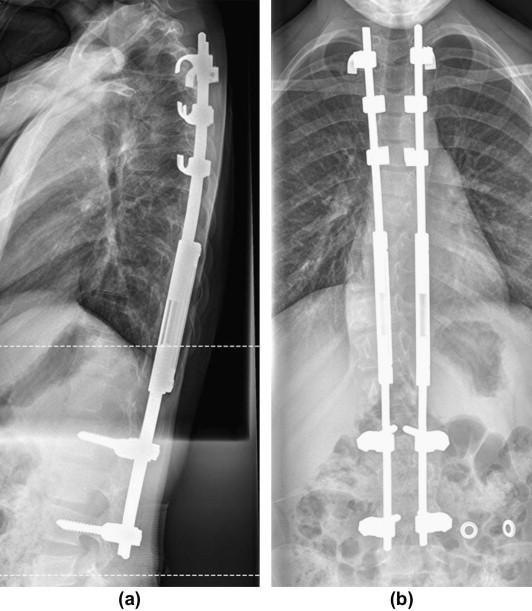
During the surgery, a metal rod was attached to the spine using hooks to help correct the curvature. The procedure was usually carried out alongside spinal fusion, which encourages the affected vertebrae to join together. This helped maintain the correction after surgery.
Harrington rods were used for many years, but modern techniques have largely replaced them. Today’s surgeries often use screws and rods to give surgeons greater control over spinal alignment. Despite this, many people who underwent the procedure decades ago still have their original Harrington rods in place.
Who Was Harrington Rod Surgery For?
The operation was mainly used for people with scoliosis, particularly teenagers whose spinal curves were severe or likely to worsen. The aim was to straighten the spine as much as possible and prevent further progression.
Surgical decisions are now based on factors such as the size of the curve, whether it is progressing, the person’s symptoms, and their general health. As a result of medical developments, the relevance of Harrington Rods today appears only when discussing previous surgery and its possible long-term effects.
Recovery After Harrington Rod Surgery
What Could You Expect During the First Year?
For someone who had undergone Harrington rod surgery, recovery would depend on the extent of the procedure, the individual’s overall health, and whether any additional surgery was required.
In the first few weeks, tiredness, stiffness, and discomfort could be expected, with activity gradually increasing as recovery progressed. Over the following months, mobility and confidence could improve, although some people might continue to experience stiffness or limitations in certain activities. Full recovery could take a year or longer, depending on the individual and the complexity of the surgery.
When Could You Return to Work?
Returning to work after Harrington rod surgery would depend on the nature of the procedure and how recovery was progressing. Someone in a desk-based role could have potentially returned sooner than someone whose job involved heavy lifting, frequent bending, or prolonged periods of standing.
The surgical team would have advised on an appropriate timeframe for returning to work, as well as any temporary adjustments that might’ve been needed. For people who have undergone Harrington rod surgery previously, any ongoing work-related limitations would depend on their current spinal health and symptoms rather than the original recovery period alone.
Could You Travel After Surgery?
Travel would generally become possible as recovery progressed following Harrington rod surgery, although long journeys could be uncomfortable during the early stages. Prolonged periods of sitting could also increase the risk of blood clots after surgery.
Before undertaking a long journey or flying, patients would need to seek advice from their surgical team about when it would be safe to travel. Recommendations could include taking regular movement breaks and following appropriate precautions to reduce the risk of blood clots. For people who have undergone Harrington rod surgery in the past, travel considerations would depend on their current mobility, spinal health and any ongoing symptoms.
Can Scoliosis Progress After Harrington Rod Surgery?
Although spinal fusion is intended to stabilise the treated section of the spine, it does not prevent all changes over time. The sections above and below the fusion can develop wear and tear, and spinal alignment may change in some people.
One possible development following this type of surgery is ‘flatback syndrome’ or ‘hypokyphosis’. This occurs when the lower back loses some of its natural kyphotic curve in the thoracic region, making it difficult to stand upright comfortably. Some people may experience challenges, including back pain, tiredness, or difficulty with everyday activities as a result. Not everyone with Harrington rods will develop these problems. However, if pain increases or posture begins to change, it is worth seeking medical advice.
What Challenges Can Occur in the Long Term?
Living with Harrington rods does not necessarily cause problems, in some cases, the metalwork can break or the bones may not fuse as intended.
Many people continue to lead active lives for decades after surgery. If you notice new pain, difficulty standing upright, numbness, or weakness, a medical assessment can help establish what is causing the symptoms and whether treatment is needed.
What Are the Long-Term Results and Success Rates?
For many patients, Harrington rod surgery provided lasting correction of their spinal curve. However, results differ from person to person. Some experience few problems later in life, while others may develop pain, changes in alignment or complications that need further treatment.
Research into long-term outcomes shows that some patients eventually require additional spinal surgery. There is no single success rate that applies to everyone, as outcomes depend on factors such as the original curve, the extent of the fusion, and any complications that develop over time.
What Happens If You Have Harrington Rods Today?
If you have Harrington rods and are not experiencing any problems, there may be no need for treatment or rod removal. Having the rods in place does not automatically mean that something is wrong.
If you are experiencing pain, stiffness or changes in posture, a specialist can review your surgical history and assess your spine. Depending on the findings, options may include monitoring, physiotherapy, or, where necessary, further surgery.
FAQs
Can you live a normal life with Harrington rods?
Yes. Many people live active lives for decades after surgery, although experiences vary depending on their spinal health and whether complications develop.
Do Harrington rods need to be removed?
Not usually. If the rods are not causing problems, removal is generally unnecessary. A specialist can advise if there is a medical reason to consider it.
What should you ask a specialist about Harrington rods?
You may wish to ask whether your spine is stable, whether your symptoms could be linked to your previous surgery, whether you need updated imaging, and what treatment options are available. It is also worth discussing any restrictions on exercise, work, or travel.
Support and Advice at Scoliosis SOS
Having Harrington rods does not mean you will necessarily experience problems later in life, but it is important to understand any changes in your spinal health. If you are concerned about pain, stiffness, or your posture, Scoliosis SOS can discuss your concerns and help you explore suitable next steps. Book an initial consultation to gain a better understanding of your back and to find out more about how we can help you.
📞 02074884428
🌐 www.scoliosissos.com
📷 @scoliosissosclinic
📧 enquiries@scoliosissos.com
📍 63 Mansell Street, London, E1 8AN (headquarters)