4.9 Out of 5 based on 875 reviews

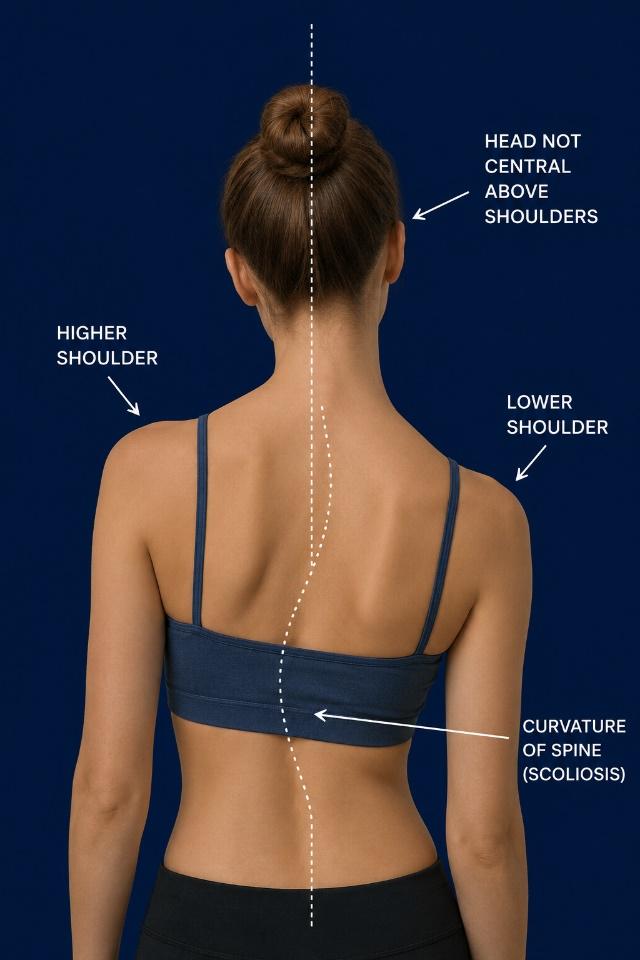
Have you noticed that your head doesn’t seem to sit evenly over your shoulders? Perhaps photos show your head leaning slightly to one side, and you feel as though your head tilts even when standing straight. Many people assume this is simply poor posture or muscle tension, which although is sometimes the case, it can also sometimes be linked to scoliosis.
Scoliosis is a condition where the spine curves laterally and rotates accordingly. Because the spine supports the head and neck, changes in spinal alignment can affect the body’s overall balance, including the position of the head over the shoulders.
Why Does the Head Become Uneven?
When the spine develops curves, the body often compensates to try to keep the eyes level and maintain balance. This compensation can lead to the head appearing tilted, shifted sideways, or not properly centred over the shoulders.
In some cases, the issue may be linked to the development of a cervicothoracic curve, or ‘pacquetito’, which is when the spine curves in the upper back/neck, causing the head position to be altered directly.
Another common cause is when the body collapses into the concavity of either a thoracic or lumbar curve as a result of the weakness of the surrounding muscles and their inability to support the body in the upright position. This causes the head to appear tilted as the entire upper body alignment is shifted.
Other Symptoms That May Occur Alongside an Uneven Head Position
People with scoliosis-related head positioning imbalance may also notice:
- Uneven shoulders
- Neck stiffness or tension
- A tendency to lean to one side
- One sided back pain
- Clothing hanging unevenly
These symptoms can develop gradually, making them easy to overlook, but its important to know the signs.
Why Early Assessment Matters
An uneven head position does not always mean scoliosis is present, but it can be an important clue. Identifying spinal imbalance early may help prevent worsening postural changes and discomfort that may occur with the progressive nature of scoliosis.
A scoliosis assessment typically examines spinal alignment, posture, movement patterns, and muscular balance. In many cases, imaging may also be recommended to better understand the spinal curves involved.
FAQ’s
Is an uneven head position always caused by scoliosis?
No. Muscle imbalance, injury, poor posture, and certain neurological conditions can also contribute to uneven head positioning. However, scoliosis is one possible underlying cause that should not be overlooked.
Can physiotherapy help improve head alignment?
Specialist scoliosis physiotherapy may help improve posture, muscular balance, spinal stability, and body awareness. Many patients experience improvements in overall alignment and comfort with targeted treatment approaches.
What type of scoliosis affects head position most?
Thoracic scoliosis and upper spinal curves are often the most likely to influence shoulder balance and head positioning, although every case is different.
Seeking Further Guidance
If you’ve noticed that your head is no longer centred over your shoulders, especially alongside uneven posture or back discomfort, it may be worth seeking a professional assessment. The team at Scoliosis SOS offers specialist scoliosis assessments and physiotherapeutic treatment programmes tailored to individual spinal conditions and postural concerns. Contact us today to find out more about how we can help you.
📞 02074884428
🌐 www.scoliosissos.com
📷 @scoliosissosclinic
📧 enquiries@scoliosissos.com
📍 63 Mansell Street, London, E1 8AN (headquarters)