4.9 Out of 5 based on 875 reviews

Have you noticed that one arm appears to hang lower than the other when standing naturally? Perhaps one hand sits closer to your thigh, sleeves seem uneven, or your shoulders never quite feel level. While many people assume this is simply a posture habit or muscular imbalance, and as much as this is a potential cause, it should be considered that scoliosis can sometimes be an underlying reason.
Scoliosis is a condition involving an abnormal sideways curvature and rotation of the spine. As the spine curves, the body often compensates in ways that affect shoulder height, rib position, and arm symmetry.
How Can Scoliosis Cause One Arm to Hang Lower?
One of the most common reasons for one arm to appear longer than the other in scoliosis is the collapsing into the concavity of the spinal curve. The “concavity” refers to the inward side of the curve where the muscles may shorten or compress.
When someone collapses into this side of the curve:
- The trunk can shift sideways
- The shoulder on that side may drop lower
- Therefore, one arm may hang lower than the other
This can happen with both thoracic (upper/mid-back) and lumbar (lower back) curvatures, depending on where the spinal imbalance is located. It is more common to see right sided curvatures in the upper back, which is often referred to as thoracic dextroscoliosis.
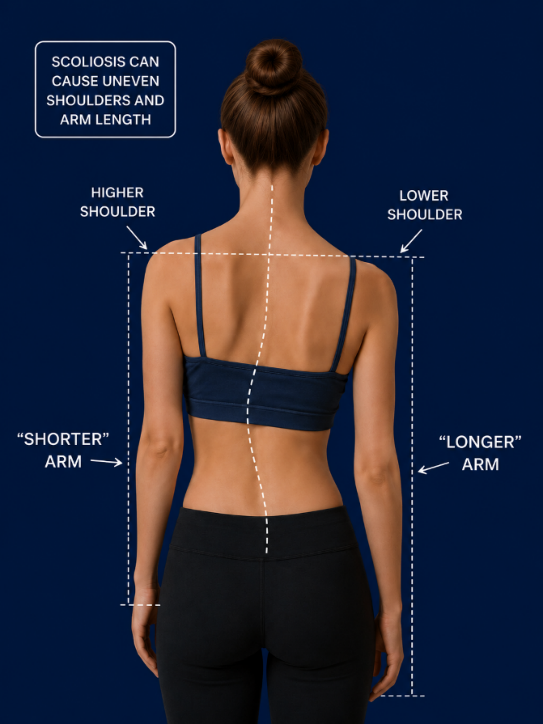
Other Scoliosis Factors That Can Affect Arm Position
Scoliosis can influence much more than just the spine itself. Several related postural changes may contribute to one arm hanging lower:
Uneven Shoulders
Spinal rotation can pull one shoulder upward while the other drops lower, creating an uneven appearance in the arms.
Rib Cage Rotation
In thoracic scoliosis, the rib cage may rotate along with the spine. This can shift the shoulder girdle and alter how the arms rest naturally.
Pelvic Imbalance
Lumbar curves often affect pelvic position. When the pelvis tilts unevenly, the body compensates upward through the torso and shoulders, sometimes causing one arm to sit lower.
Muscular Imbalance
Over time, muscles on one side of the body may become tighter or weaker due to asymmetrical posture. This can reinforce uneven positioning.
Forward or Sideways Trunk Shift
Some people with scoliosis develop a noticeable sideways lean or forward collapse, which changes how the arms hang relative to the body.
Symptoms That May Occur Alongside Uneven Arm Position
People experiencing scoliosis-related imbalance may also notice:
- One shoulder blade more prominent than the other
- Uneven waist shape
- One hip higher than the other
- Uneven back or shoulder tension
- Clothing fitting unevenly
- Difficulty standing upright comfortably
- Feeling tilted or off-centre
These changes are often gradual or subtle, and may become more noticeable over time due to scoliosis’ progressive nature.
FAQs
Is one arm hanging lower always caused by scoliosis?
No. Shoulder injuries, muscular imbalances, nerve conditions, and habitual posture can also contribute. However, scoliosis is one possible explanation, especially if other postural asymmetries are present.
Can physiotherapy improve uneven arm posture?
Specialist scoliosis physiotherapy may help improve alignment, muscular support, posture awareness, and balance throughout the spine and torso. Treatment approaches are tailored to the individual’s curve pattern and symptoms.
Does thoracic or lumbar scoliosis affect the arms more?
Thoracic scoliosis more directly affects the shoulders and rib cage, but lumbar scoliosis can also contribute indirectly through pelvic imbalance and compensatory posture changes.
Should I be concerned if the imbalance is getting worse?
If asymmetry becomes more noticeable over time, especially alongside pain, stiffness, or changes in posture, it may be helpful to have the spine assessed by a scoliosis specialist.
When to Seek Advice
Persistent postural asymmetry can sometimes indicate an underlying spinal imbalance rather than a simple posture habit. If you’ve noticed one arm hanging lower than the other, particularly alongside uneven shoulders or waist shape, a professional scoliosis assessment may help identify the cause.
Scoliosis SOS provides specialist scoliosis physiotherapy assessments and personalised treatment programmes for individuals experiencing postural changes, spinal curvature, and related symptoms.
Contact us to learn more about assessment and treatment options.
📞 02074884428
🌐 www.scoliosissos.com
📷 @scoliosissosclinic
📧 enquiries@scoliosissos.com
📍 63 Mansell Street, London, E1 8AN (headquarters)