4.9 Out of 5 based on 875 reviews

Support before and after your surgery
At Scoliosis SOS, we know that choosing to have surgery for scoliosis can be a big decision – often one that comes after a lot of discussion with specialists, family, and friends. Whether you’re preparing for spinal fusion, or you have had surgery in the past and want to work on your strength, we’re here to guide and support you at every stage of your journey.
Types of Surgery for Scoliosis
Spinal Fusion (SF)
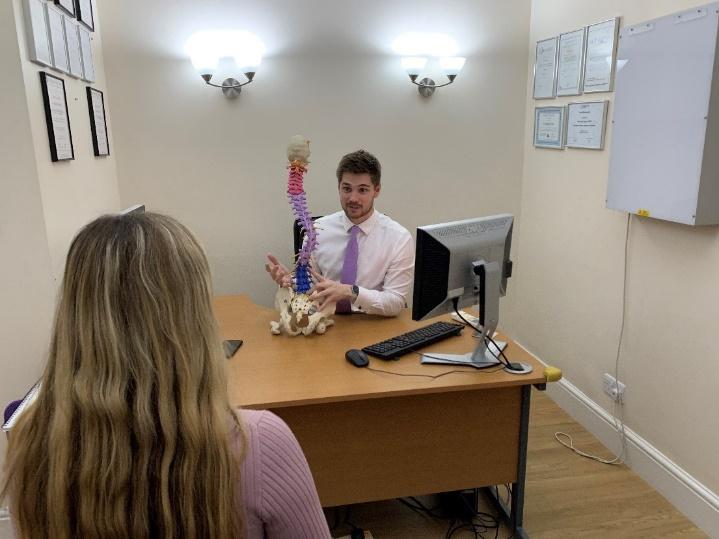
Spinal fusion is currently the most common surgical treatment for progressive idiopathic scoliosis and is typically offered when a curve measures over 40 degrees. During this procedure, two or more vertebrae are permanently joined together using metal rods and screws to keep the spine in a straighter position. Most surgeries are performed using a posterior (back) approach.
As with any major operation, spinal fusion does carry risks, including:
- Screw misplacement
- Nerve damage
- Loosening of the screws
- Infection or bleeding
Vertebral Body Tethering (VBT)
VBT is a less invasive option that aims to correct the curve without fusing the spine. It’s usually suitable for children and teenagers who are still growing, with flexible curves between 35 and 65 degrees. Screws are inserted into the vertebrae on the outer (convex) side of the curve and connected with a strong cord, which is then tightened to help straighten the spine.
Possible complications include:
- Tether breakage or loosening
- Over-correction of the curve
Anterior Scoliosis Correction (ASC)
ASC uses a similar approach to VBT but is generally offered to older teens or adults with larger curves (65 degrees or more). It allows one side of the spine to continue growing while partially restraining the other, helping to reshape the spine over time. Although the curve improves straight away after surgery, further changes continue as the spine remodels.
Why Prehab and Rehab Matter
Preparing for Surgery – Prehab
Many of our patients choose to complete a short, intensive course of treatment before their operation to help them get into the best shape possible. This can:
- Improve spinal flexibility
- Strengthen the core and surrounding muscles
- Make recovery quicker and easier
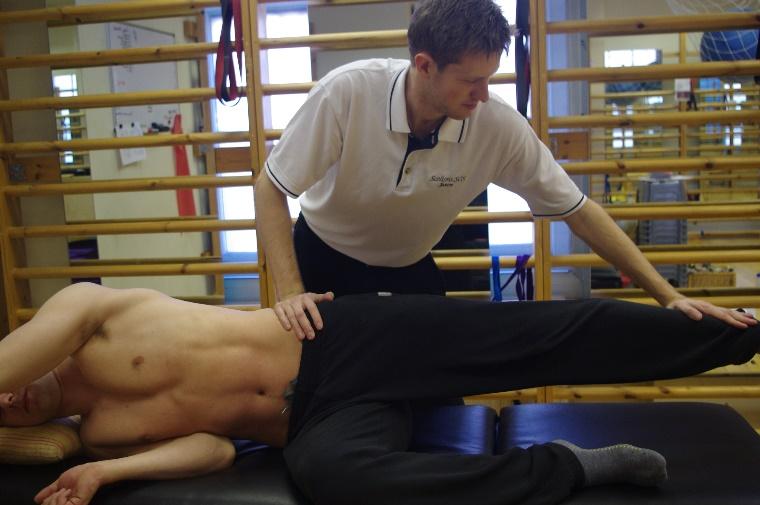
Research backs this up – studies (such as Monticone et al., 2014) have shown that specific exercise programmes before and after surgery can reduce pain and disability and improve long-term outcomes.
Recovering Well – Post-Surgery Rehab
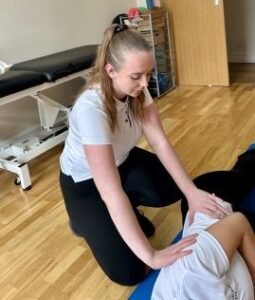
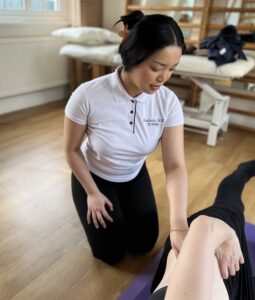
Recovery doesn’t end when you leave hospital. Our tailored rehabilitation programme begins as early as two weeks after surgery, focusing first on safe movement and independence, and gradually building strength and control through:
- Core and postural strengthening
- Functional movement (e.g. sitting, standing, walking safely)
- Scar tissue management
- Specific exercises based on the Schroth method and isometric strengthening
These exercises are known as PSSE (physiotherapy scoliosis-specific exercises) and have been shown in research (European Spine Journal, 2021) to improve recovery and quality of life after scoliosis surgery.
Our ScolioGold Approach
At ScoliosisSOS, we use our unique ScolioGold programme, which brings together multiple evidence-based exercise methods to support patients before and after surgery. These include:
- The Schroth Method – a well-established technique that uses breathing, posture correction, and muscle activation to improve spinal alignment and function.
- Isometric Strengthening – helps to build stability around the spine without movement, which is especially important during early recovery.
Each plan is personalised to your specific curve and surgical outcome, and we work closely with you (and your consultant, if needed) to make sure your exercises are appropriate and effective.
Typical Recovery Timeline
Here’s what a standard recovery journey may look like with us, depending on your procedure and individual circumstances:
| Time After Surgery | Focus of Therapy |
|---|---|
| 2 weeks | Core activation, walking, safe movement and transfers |
| 4 weeks | Scar tissue work, posture, everyday movements (e.g. getting on/off the floor) |
| 6 weeks | Gentle strengthening (glutes, core, Schroth exercises) |
| 2 months | Core work and specific strengthening exercises |
| 3 months | Use of poles in exercises (without straps), further strengthening |
| 5-6 months | Hanging exercises, advanced core work and posture control |
Patients are usually advised to avoid non-contact sports for 6 months, and contact sports for 12 months, but your surgeon will provide tailored advice.
Pre- and Post-Surgery Treatment Packages
We offer flexible treatment packages to suit your needs, whether you want to focus on preparing for surgery, recovering afterwards, or both.
Our clinic offers structured programmes designed to support patients both before and after surgery, helping them prepare their bodies and recover with confidence. The all-inclusive programme guides patients through the full surgical journey, beginning with an intensive preparation phase that focuses on improving flexibility, building strength, and optimising posture before surgery. Following the procedure, rehabilitation progresses gradually, helping patients safely reintroduce movement, manage pain and scar tissue, and regain the ability to perform everyday activities comfortably.
As recovery advances, treatment becomes more focused on higher-level strengthening, posture, and long-term movement control to support a return to normal daily life. For patients who need support at only one stage of their journey, separate programmes are also available for either pre-surgery preparation or post-surgery rehabilitation, offering targeted physiotherapy to help patients build strength before surgery or restore movement and function during recovery.
FAQs
How long does scoliosis surgery usually take?
The duration of surgery depends on the procedure and complexity of the curve, but most operations take several hours. Your surgical team will provide a more specific timeframe based on your treatment plan.
Will surgery completely straighten my spine?
Surgery aims to significantly reduce the curve and improve alignment, but it may not result in a perfectly straight spine. The goal is to achieve a safe and balanced correction.
Will I have permanent movement restrictions after spinal fusion?
Spinal fusion does limit movement in the fused section of the spine, but most patients adapt well and can return to a wide range of everyday activities with minimal impact on overall mobility.
Is rehabilitation necessary even if I feel fine after surgery?
Yes, rehabilitation is important for restoring strength, improving posture, and ensuring a safe return to daily activities, even if you feel well early on.
You’re in Safe Hands
We know that no two scoliosis journeys are the same. Our experienced team will work closely with you to understand your surgical outcome, any complications, and your goals for recovery.
Whether you’re preparing for surgery or already recovering, we’re here to help you feel strong, confident, and in control of your rehabilitation.
Get in Touch
If you’d like to learn more or book a consultation, we’re always happy to chat.
📞 Call us: 020 7488 4428
📧 Email: enquiries@scoliosissos.com
🌐 Visit: https://www.scoliosissos.com/