4.9 Out of 5 based on 875 reviews

An indentation or a ‘dip’ on one side of your waistline can feel confusing, especially if it becomes more noticeable over time. Whilst there are varying reasons this may be presenting; it is important to consider scoliosis as a possible cause.
Scoliosis is a condition in which the spine curves sideways. Not all spines are perfectly straight, but when the curvature exceeds a 10-degree deviation (measured via the cobb angle of a spinal x-ray), then it is considered scoliotic. The lateral curvature affects more than just the spine itself; it can affect the way the torso is shaped, for example by creating a ‘dip’ in the waistline on one side. This happens when the body begins to lean into the concavity of the lumbar curve, creating an area of ‘collapse’ between the ribs and hip. As scoliosis is asymmetrical by nature, this may also create an irregularity on the opposite side, where the convexity of the curve can make the waist appear less defined.

Though this is often one of the first signs that cause people to suspect that they may have scoliosis, the visibility of the indentation does not directly indicate the severity of the curve – even mild curvatures can present as physical asymmetries, dependent on where the curve sits and how the body responds to it.
FAQs
Is the indentation caused by muscle or bone?
Primarily the spine (bone structure) is responsible for the indentation, but muscles and soft tissue adapt around the curve; thus, the visible ‘dip’ is a combination of skeletal alignment and how the muscles sit over it.
Can the indentation get worse over time?
Scoliosis is a progressive condition, typically seeing around 1-degree of progression per year without intervention. If the curve progresses, it is likely that the visible asymmetries that come with it will increase respectively.
Does posture affect how visible it is?
Yes. Standing, sitting, or twisting differently can temporarily exaggerate or reduce the appearance, because posture changes how the curved spine sits, and therefore how it distributes weight and tension.
Treatment
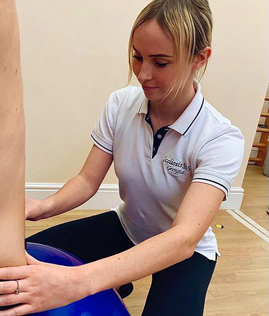
With the right treatment, it is possible to reduce the progression or even the visibility of these asymmetries. Physiotherapeutic Scoliosis Specific Exercises are incredibly useful to retrain the spine and schema into a more central position, and to strengthen muscles to be able to support this. If you’re looking for more information, guidance, or professional support, Scoliosis SOS offers resources and services specifically for people exploring these kinds of changes. Book your initial consultation to find out how we can support you, and check out our results gallery to see how we have helped others!
📞 02074884428
🌐 www.scoliosissos.com
📷 @scoliosissosclinic
📧 enquiries@scoliosissos.com
📍 63 Mansell Street, London, E1 8AN (headquarters)