Scoliosis SOS

Our Customers Say | Excellent     4.9 Out of 5 based on 875 reviews 


Why is One Shoulder Higher than the Other? Common Causes and When to Seek Help.

Why is One Shoulder Higher than the Other? Common Causes and When to Seek Help.

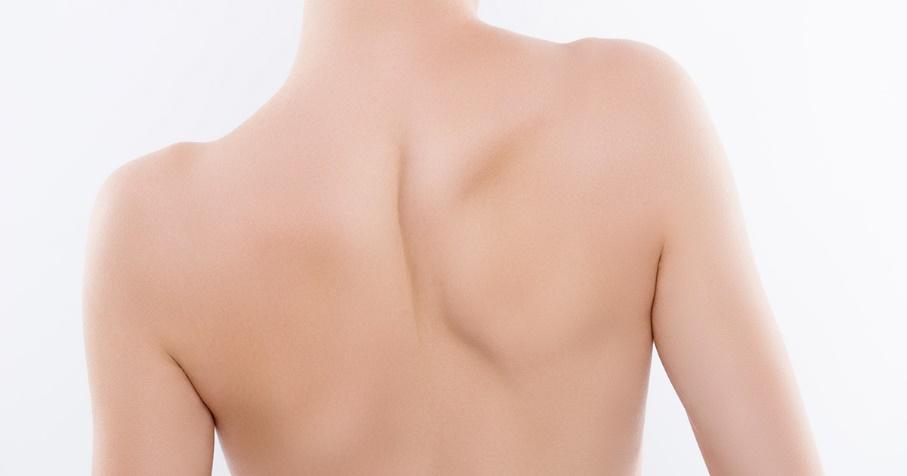
If you’ve noticed that one shoulder sits higher than the other in you or your child, then know that you are not alone. It is possible that simple postural habits can create the uneven shoulder appearance, however it can also be one of the first visible signs of scoliosis. For many, this small physical asymmetry can initiate them asking questions about spinal health. This article will explore the relationship between uneven shoulders and posture.

Postural Habits vs Structural Asymmetries

It is a common assumption that the cause of asymmetrical shoulders is rooted in the use of heavy one-sided bags, sports habits, or even slouching. It is true that posture can influence how the body appears functionally, but what does it mean when one shoulder remains higher than the other at all times, not just during the aforementioned actions? Constant unevenness could indicate a structural change in the spine, where instead of there being a functional change in posture, the vertebrae adopt a wedged shape, altering ones relaxed posture as the body shifts respectively. When these changes become structural, it becomes difficult to correct by simply “standing up straight.” This is why a professional assessment is important.

FAQs

How Can I Quickly Check at Home if it is a Structural Change?

The Adams Forward Bend Test is a common way to identify the difference between a structural and functional change in posture and body symmetry. Standing with feet together, slowly bend forwards and let your head and hands hang down. When looking from behind, if unevenness or a raised area is present on one side of the back, then it could indicate scoliosis. While this check isn’t diagnostic, it can highlight whether further evaluation is worthwhile.
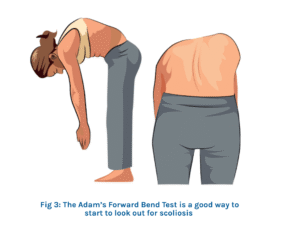
A common misconception about scoliosis is that it causes only lateral curvature of the spine and therefore only a sideways shift of the body. This is a main factor of scoliosis, and it can cause one shoulder to appear higher than the other if one side of the body ‘collapses’ into the concavity of the curve. However, what is also presented in scoliotic spines is spinal rotation. This can cause the attachments in the area of rotation to rotate too – for example, if there is a curve to the right in the upper back, there may be some rib cage rotation, which causes a prominence in the back. This can ‘tip’ the shoulder blade and shift the ribs – causing some shoulder asymmetries.

Early assessment is vital to opening intervention pathways that don’t involve surgery. Options can include the observational approach, bracing for younger patients, or physiotherapeutic scoliosis specific exercises which can be tailored to individuals in all stages of scoliosis, for varying ages, genders, and severity, in our ScolioGold Treatment Approach – which has aims to improve posture and reduce curve progression.

Getting Started

Asymmetry is often the body’s way of signalling a spinal shift. Don’t wait for pain to start. Book your initial consultation for professional assessment and to find out how treatment can be tailored to you, even without a prior official scoliosis diagnosis.

📞 02074884428
🌐 www.scoliosissos.com
📷 @scoliosissosclinic
📧 enquiries@scoliosissos.com
📍 63 Mansell Street, London, E1 8AN (headquarters)