4.9 Out of 5 based on 875 reviews

Cervicothoracic scoliosis refers to an abnormal sideways curvature of the spine that occurs where the cervical (neck) spine meets the thoracic (upper back) spine. This area is essential for head positioning, shoulder alignment, and overall posture. Small but influential curves in this region are sometimes informally referred to as “Paquetitos” – compact, high-up curvatures that can have a surprisingly large effect on comfort and movement.

Many people searching for terms such as neck scoliosis, shoulder pain, or upper spine curvature may not realise that these symptoms can be linked to even a subtle spinal curve. This blog explains how cervicothoracic scoliosis develops, what symptoms to look out for, and how specialist care can help.
What Is Cervicothoracic (High Thoracic) Scoliosis?
Cervicothoracic scoliosis affects the transition zone between the neck and upper back. Unlike lower spinal curves, these high thoracic curves directly influence how the head sits over the shoulders. Even mild curvatures can lead to muscle imbalance, postural asymmetry, and persistent discomfort.
Because these curves are higher up, they are sometimes overlooked during routine checks. However, they often explain ongoing neck tension, uneven shoulders, or upper back discomfort that does not improve with general exercises.
Common Symptoms: Neck Pain, Shoulder Pain, and Headaches
People with cervical or high thoracic scoliosis may experience:
- Ongoing neck pain or stiffness
- One shoulder appearing higher or more forward
- Persistent shoulder pain without a clear injury
- Tension headaches, including “pillow headaches” that are worse on waking
These symptoms occur because the spinal curve changes how muscles work together. Some muscles become overactive and tight, while others weaken, placing extra strain on the neck and shoulders.

Why High Curves Affect Posture and Balance
The head weighs approximately 4-5 kg. When spinal alignment shifts due to a high curve, the body compensates to keep the eyes level. This often results in spinal rotation, uneven shoulder height, and altered weight distribution. Over time, these compensations can influence breathing mechanics, balance, and overall coordination.
How a Double Curve Scoliosis Affects Your Balance and Gait
In some cases, cervicothoracic scoliosis forms part of a double curve scoliosis pattern, where the spine curves in opposite directions at different levels. While this can help the body remain upright, it often leads to inefficient movement.
People with double curves may notice changes in their gait, such as uneven stride length, reduced arm swing on one side, or a feeling of instability when walking. Over time, walking with scoliosis can place additional strain on the hips, knees, and feet if the underlying spinal imbalance is not addressed.
Scoliosis Convex to the Left: Understanding C-Curves and S-Curves
Scoliosis is also described by the direction of its curve. Scoliosis convex to the left means the spine curves outward to the left side. This may present as a single C-curve scoliosis or as part of an S-curve, also known as double scoliosis.
C-curves involve one main curve, while S-curves involve two opposing curves that influence posture and balance in different ways. In the upper spine, a left convex curve may contribute to uneven shoulders, neck tilt, or one-sided muscle tightness. Correctly identifying the curve pattern is essential for effective treatment planning.
Treatment Options for Cervicothoracic and Complex Curves
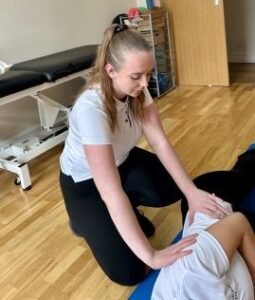
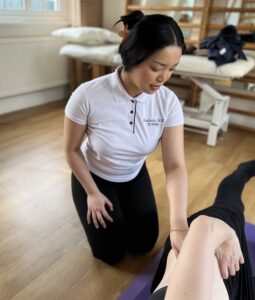
At Scoliosis SOS, treatment focuses on addressing the cause of the curve rather than only relieving symptoms. The ScolioGold method uses specialist, de-rotational exercises to improve spinal alignment, muscle balance, and postural control. This approach is particularly beneficial for cervical, high thoracic, and double curve scoliosis, where targeted correction is crucial.
Taking Action
Cervical and high thoracic scoliosis may be subtle, but their effects on neck comfort, shoulder alignment, and walking patterns can be significant. Symptoms such as uneven shoulders, chronic neck pain, headaches, or changes in gait should not be ignored.
At Scoliosis SOS, our London-based specialist team has extensive experience in assessing and treating complex spinal curves. Booking an initial consultation allows us to assess your spinal pattern and discuss how the ScolioGold method may help reduce pain, improve posture, and restore confidence in movement.
📞 02074884428
🌐 https://www.scoliosissos.com
📷 @scoliosissosclinic
📧 enquiries@scoliosissos.com
📍 63 Mansell Street, London, E1 8AN (headquarters)