4.9 Out of 5 based on 875 reviews


Early diagnosis of any condition is always the best way to get ahead of it, scoliosis included. Being able to recognise the early signs of a spinal curvature is important in helping parents seek an appropriate assessment sooner. Scoliosis, which is the abnormal lateral curvature and rotation of the spine, most commonly develops during childhood or adolescence, and doesn’t always have the most obvious symptoms, so knowing what to look for can make it easier to identify postural changes in your child.
Why is Early Detection Important?
Scoliosis is a naturally progressive condition, meaning that spinal curves can become more pronounced over time. This progression is particularly likely during periods of rapid growth, such as puberty. During these growth spurts, curves may progress more quickly because the bones are growing rapidly and there is greater potential for the spine to become increasingly misaligned. As the spine curves, spaces are created between the vertebrae, which during growth, can begin to affect the shape of the vertebrae themselves. As the vertebrae continue to grow and adapt to the altered mechanical environment, they may become wedge-shaped, with one side of the vertebra growing more than the other (into the aforementioned spaces). This wedging can, in turn, contribute to further curvature of the spine, creating a cycle in which spinal deformity and vertebral growth influence one another. Because of this development cycle, detecting the condition early is vital, as it means that appropriate monitoring can be conducted to decipher appropriate treatment options, such as bracing or physiotherapy, when applicable, to slow or stop said progression. We work closely with the London Orthotic Consultancy, who provide expert bespoke scoliosis bracing, which complements our scoliosis-specific exercise treatment.
What Are the Early Signs of Scoliosis in Children?
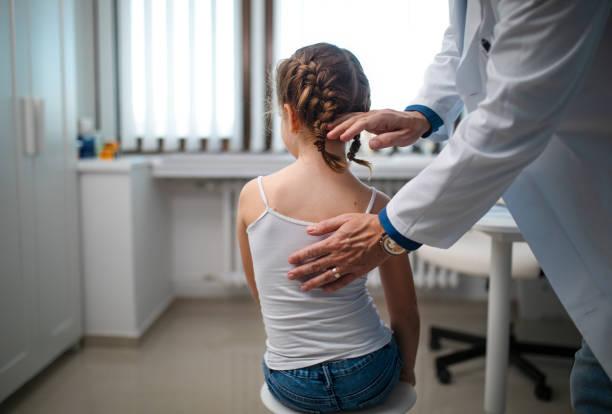
Before receiving diagnosis, there often some visible signs that could indicate the presence of scoliosis, with the most noticeable signs being asymmetries across the body. This may manifest as one shoulder sitting higher than the other, one shoulder blade sticking out more than the other, or one hip sitting higher than the other. Other asymmetries can include an indentation on one side of the waist, or one arm appearing longer than the other.
Another tell-tale sign that may lead to people seeking a scoliosis diagnosis for their child is the irregular appearance of clothes or bags when being worn. An uneven hemline on skirts or trousers, or even a backpack or rucksack sitting unevenly on the back could signify a potential spinal curvature in your child. Some may notice a prominence on the back of their child’s ribs when they bend forwards, or some may notice that their child’s head does not centre directly over the pelvis.
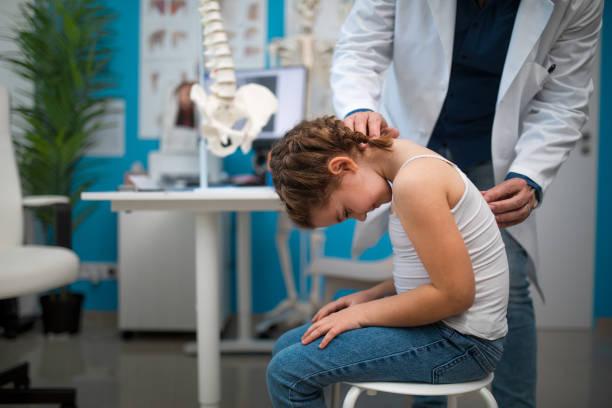
There is an array of visible signs of scoliosis, but it is important to note that these signs do not mean that your child definitively has scoliosis. Changes in posture can have various causes, so a professional assessment is recommended if you notice persistent asymmetry.
FAQ’s
At what age can scoliosis first develop in children?
Scoliosis can develop at different ages. Adolescent idiopathic scoliosis is particularly common during the growth spurt around puberty, although scoliosis can also occur in younger children.
Is scoliosis in children painful?
The answer varies among individuals. Most children with scoliosis do not experience significant pain., but if a child has persistent or severe back pain alongside a spinal curvature, further assessment may be appropriate.
Can parents check their child's spine at home?
Parents can look for visible signs of asymmetry, but a home check cannot diagnose scoliosis. If you notice changes in your child’s posture or body symmetry, a healthcare professional can provide a more appropriate assessment.
Does every child with scoliosis need a brace?
No. Bracing is not required for every child with scoliosis. The decision to use a brace depends on factors such as the child’s age, remaining growth and characteristics of the spinal curve. For some growing children with certain types and degrees of scoliosis, bracing may be recommended to help prevent the curve from progressing, and it is advisable to continue with physiotherapy during this time.
Can exercise help children with scoliosis?
Scoliosis-specific exercises may help children develop postural awareness, muscular control and strategies for managing their individual spinal alignment. Exercise programmes should be appropriately tailored to the child’s needs.
Addressing the Early Signs
At Scoliosis SOS, the ScolioGold therapists can assess for scoliosis and provide individualised scoliosis-specific exercise programmes alongside appropriate advice about managing the condition. Our team are experts in delivering high-quality personalised scoliosis care, so you can be sure you or your child is in safe hands. Contact us to find out more.
📞 02074884428
🌐 www.scoliosissos.com
📷 @scoliosissosclinic
📧 enquiries@scoliosissos.com
📍 63 Mansell Street, London, E1 8AN (headquarters)