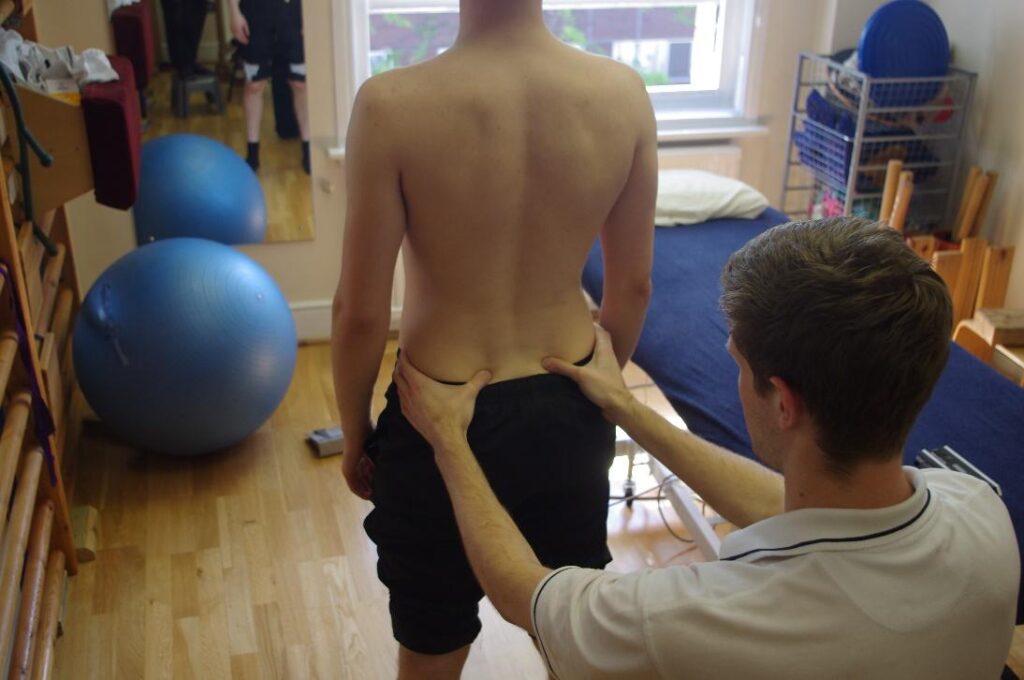
If you’ve ever noticed that one hip looks slightly higher than the other; maybe in the mirror, in photographs, or even in how clothes sit – it’s understandable to feel a bit concerned. This kind of asymmetry is actually very common, and while it can be linked to everyday habits like how you stand or carry weight, it can also be a sign of scoliosis.
Scoliosis is a 3D condition where the spine curves and rotates, and this rotation can affect more than just your back. As the spine shifts, it can also pull the pelvis slightly out of alignment, which may make one hip appear higher or more prominent. Over time, this may also lead to muscle imbalances, where one side feels tighter and the other weaker, making the unevenness more noticeable.
That said, scoliosis may not be the only possible cause. Uneven hips can sometimes be as a result of a leg length difference (LLD), or simply postural habits that are developed overtime. The key is to understand whether what you’re noticing is structural (coming from the spine/bones) or functional (relative to musculature and posture.)
FAQs
How Can I check at home if this is a structural or functional asymmetry?
One check you can complete at home is the Adams Forward Bend Test. Sitting on a chair or stool with your feet and ankles together, bend down towards your toes with the hands either side of your feet. You can ask someone to check your ribs and lower back for any unevenness or prominences. This can be a helpful early indicator of structural asymmetry.
Should I be concerned about uneven hips?
Not always. Mild asymmetry can be quite normal. However, if it seems to worsen overtime or you notice one side of the waist drops in significantly more compared to the other side, or you experience any discomfort alongside it, it’s worth getting it looked at.
Can uneven hips lead to pain?
Sometimes. Over time, uneven loading through the hips and spine may contribute to lower back, hip, or even knee and ankle pain.
What if Scoliosis is the cause?
If scoliosis is the underlying cause, there are non-surgical treatment options available, including scoliosis-specific exercise programmes such as the ScolioGold Method, which incorporates the Schroth Method as a key part of its foundations.
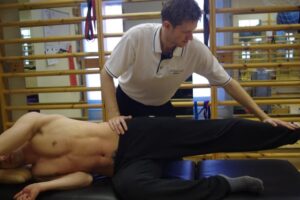
If something doesn’t feel quite right with your posture, it’s always better to check than to wait or wonder. Here at Scoliosis SOS, we support patients at every stage – whether you’re just starting to notice changes, or looking into treatment options. Book an initial consultation to find out more.
📞 02074884428
🌐 www.scoliosissos.com
📷 @scoliosissosclinic
📧 enquiries@scoliosissos.com
📍 63 Mansell Street, London, E1 8AN (headquarters)