4.9 Out of 5 based on 875 reviews


Chronic pain can be confusing and frustrating—especially when scoliosis is involved. Unlike typical aches, chronic pain lasts for months or even years. It’s usually defined as pain that persists or recurs for over three months.
A recent review by Cheng et al. (2023) found that people with scoliosis are more likely to experience long-term back pain. This discomfort often presents differently to that in individuals without scoliosis, and for many, it becomes a daily challenge.
At Scoliosis SOS, we believe chronic pain management goes beyond symptom relief. It involves understanding the root causes and developing a sustainable, personalised plan. This post looks at why scoliosis can lead to chronic pain—and how we help manage it.
What is scoliosis?
Scoliosis is a sideways curve of the spine, forming an “S” or “C” shape when viewed from behind. It is diagnosed when a spinal curve reaches 10 degrees or more on an X-ray (Weinstein et al., 2008). The spine often rotates as well, making the condition more complex.
What is chronic pain — and how does scoliosis contribute?
Chronic pain is pain lasting more than three months, sometimes continuing after the original cause has healed. Unlike acute pain, which warns us of injury, chronic pain can become a condition in itself—affecting movement, sleep, mood, and overall wellbeing.
Scoliosis is a three-dimensional spinal condition that can be structural (permanent) or non-structural (postural). Structural scoliosis includes idiopathic and non-idiopathic types (Karimi & Rabczuk, 2020).
Pain is often caused not by the curve itself, but by the body’s compensation. Muscles may tighten on one side and weaken on the other, leading to strain and imbalance. This can create a cycle of fatigue, tension, and discomfort.
Importantly, curve severity doesn’t always match pain levels. People with mild curves can experience severe pain, while those with larger curves may feel little discomfort. Chronic pain often involves muscular strain, joint stiffness, and sometimes nerve irritation. It also affects sleep, energy levels, and emotional health—highlighting the need for early, tailored treatment.
How Can Chronic Pain from Scoliosis Be Managed?
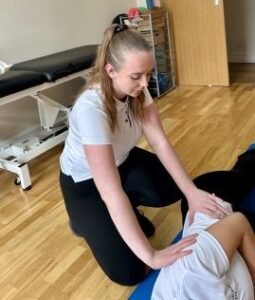
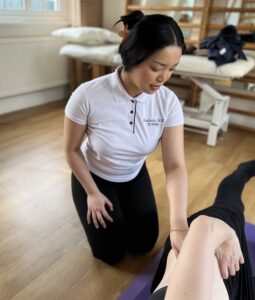
Chronic scoliosis-related pain can restrict movement, affect posture, and impact confidence. At the Scoliosis SOS Clinic, we offer a personalised, non-surgical approach aimed at reducing pain and enhancing function. A key part of this approach is the ScolioGold Method, which combines the well-established Schroth Method with a variety of complementary techniques to provide tailored treatment for each individual.
The Schroth Method, developed in Germany by Katharina and Christa Lehnert-Schroth, uses targeted exercises and a specialised breathing technique called Rotational Angular Breathing (RAB). These are tailored to each patient’s curve and aim to de-rotate the spine, correct muscle imbalance, and improve posture. Studies show Schroth-based therapy can reduce the Cobb angle, ease pain, and improve breathing and quality of life (Schreiber et al., 2016; Kuru et al., 2016; Monticone et al., 2016). At Scoliosis SOS, we also use a variety of additional techniques alongside the ScolioGold Method to support the best possible results for our patients:
- SEAS (Scientific Exercise Approach to Scoliosis)
- Muscle Energy Technique (MET)
- Myofascial release therapy
- Core strengthening
- Postural and neuromuscular re-education

If you or a loved one are struggling with scoliosis-related pain, personalised support can make all the difference. To learn more about our non-surgical treatment options or to discuss your individual needs, please don’t hesitate to get in touch with the Scoliosis SOS Clinic. An initial consultation will help determine what is best for you; we’re here to help you on your journey to improved comfort and mobility.
📞02074884428
✉️info@scoliosissos.com
📸 @scoliosissosclinic (Instagram)
References
Cheng, H-L., Wang, Y-T., Lin, Y-H. and Wu, J-C., 2023. Current knowledge on the different characteristics of back pain in adults with and without scoliosis: a systematic review. Scoliosis and Spinal Disorders, 18(1), p.3. https://doi.org/10.1186/s13013-022-00240-1
Karimi, M.T. and Rabczuk, T., 2018. Scoliosis conservative treatment: A review of literature. Journal of Craniovertebral Junction and Spine, 9(1), pp.3–8. https://doi.org/10.4103/jcvjs.JCVJS_39_17
Kuru, T., Yeldan, İ., Dereli, E.E., Özdinçler, A.R., Dikici, F. and Çolak, İ., 2016. The efficacy of three-dimensional Schroth exercises in adolescent idiopathic scoliosis: a randomised controlled clinical trial. Clinical Rehabilitation, 30(2), pp.181–190. https://doi.org/10.1177/0269215515575745
Monticone, M., Ambrosini, E., Cazzaniga, D., Rocca, B. and Ferrante, S., 2016. Active self-correction and task-oriented exercises reduce spinal deformity and improve quality of life in subjects with mild adolescent idiopathic scoliosis: results of a randomised controlled trial. European Spine Journal, 25(10), pp.3120–3129. https://doi.org/10.1007/s00586-016-4603-6
Schreiber, S., Parent, E.C., Khodayari Moez, E., Hedden, D.M., Hill, D.L. and Moreau, M.J., et al., 2016. Schroth physiotherapeutic scoliosis-specific exercises added to standard of care improve outcomes in adolescents with idiopathic scoliosis: an assessor and statistician blinded randomized controlled trial. PLOS ONE, 11(12), p.e0168746. https://doi.org/10.1371/journal.pone.0168746
Weinstein, S.L., Dolan, L.A., Cheng, J.C., Danielsson, A. and Morcuende, J.A., 2008. Adolescent idiopathic scoliosis. The Lancet, 371(9623), pp.1527–1537. https://doi.org/10.1016/S0140-6736(08)60658-3